
1. What Is Organic Basmati White Rice?
Organic Basmati White Rice is milled, polished basmati paddy grown on land that has been free of prohibited synthetic pesticides, herbicides and chemical fertilizers for at least three consecutive years, then handled through a documented organic chain of custody all the way to the export bag. Basmati itself is a landrace family native to the sub-Himalayan belt, and the name is a legally protected geographical indication in India as of 2016, meaning only rice grown in specific notified districts of Punjab, Haryana, Himachal Pradesh, Uttarakhand, western Uttar Pradesh and parts of Jammu can be marketed under the term.
To be graded as basmati at all, the raw kernel must meet minimum physical thresholds set out in India's export grading rules: an average pre-cooked length of at least 6.61 mm, and an elongation ratio of roughly 1.7 or higher once boiled. Export-grade lots sold into the US market typically run longer than the minimum, with premium consignments averaging 7.9 mm to 8.4 mm in raw length and elongating to nearly double that once cooked.
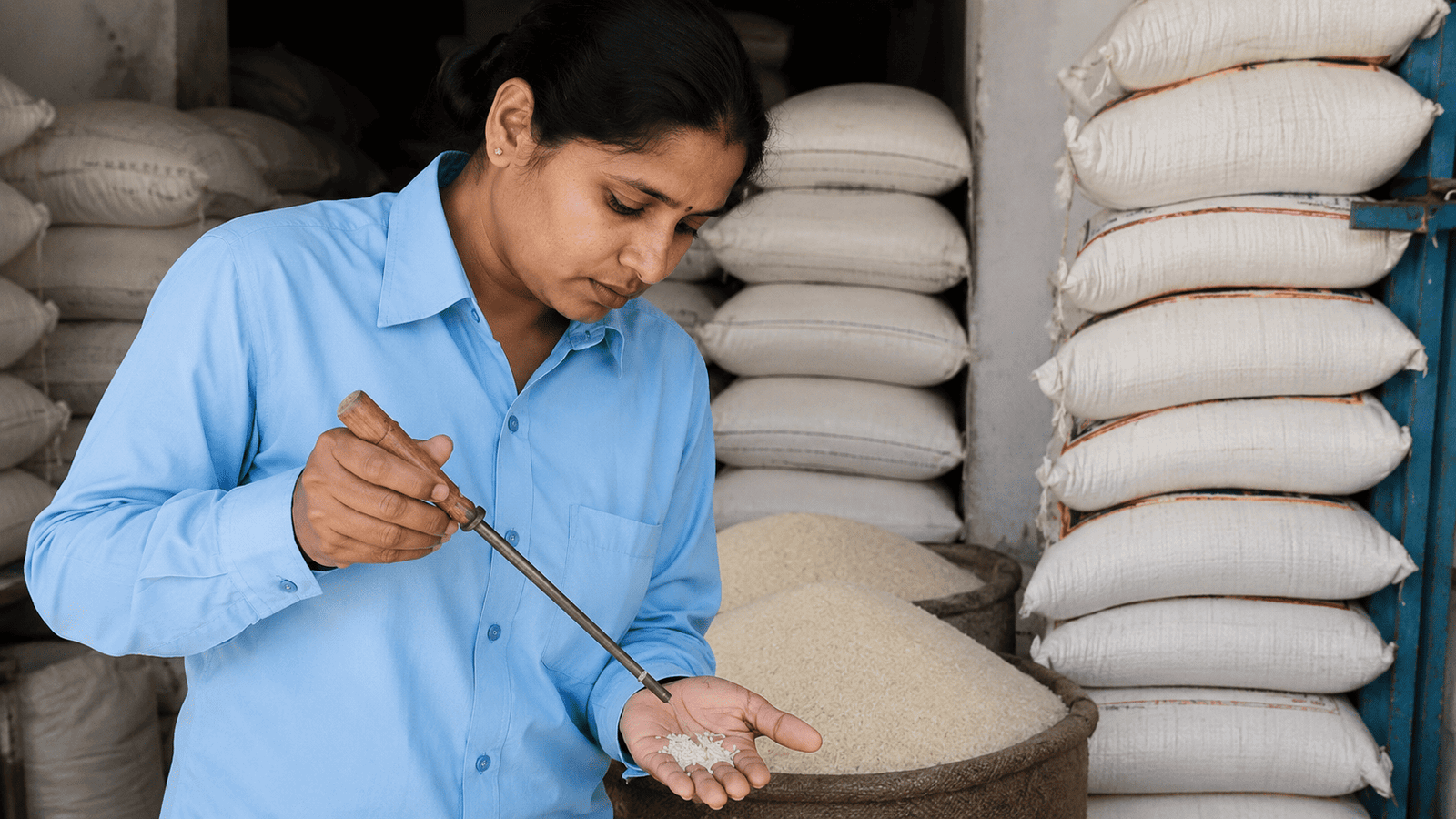
The word “white” describes the milling step, not the farming method. After the paddy is husked, the bran layer and germ are removed by polishing, leaving a smooth ivory kernel that cooks faster and holds a fluffier, more separate texture than unmilled brown basmati. Organic status is a separate, additional claim layered on top of this: it depends on how the crop was grown, not on how it was milled.
For a shipment to legally carry the word “organic” on a US retail shelf, it needs certification under the USDA National Organic Program, either directly or through India's National Programme for Organic Production (NPOP), which the USDA formally recognizes as equivalent. In practice, that combination of protected regional origin, verified physical grading, careful aging, and audited organic production is what separates true Organic Basmati White Rice from a generic “aromatic long grain” label on a US grocery shelf.
2. From Seed to Ship: How Organic Basmati White Rice Is Cultivated and Aged
Every certified lot of Organic Basmati White Rice can be traced back to a specific field group, and that traceability starts before a single seed goes into the ground. The chart below walks through the six stages a lot passes through between planting and export — each one independently documented for the organic audit trail.
Six documented stages, each logged for USDA NOP / NPOP traceability.
Aging is the step most buyers underestimate: rice milled too soon after harvest cooks stickier and has less elongation, regardless of organic status.
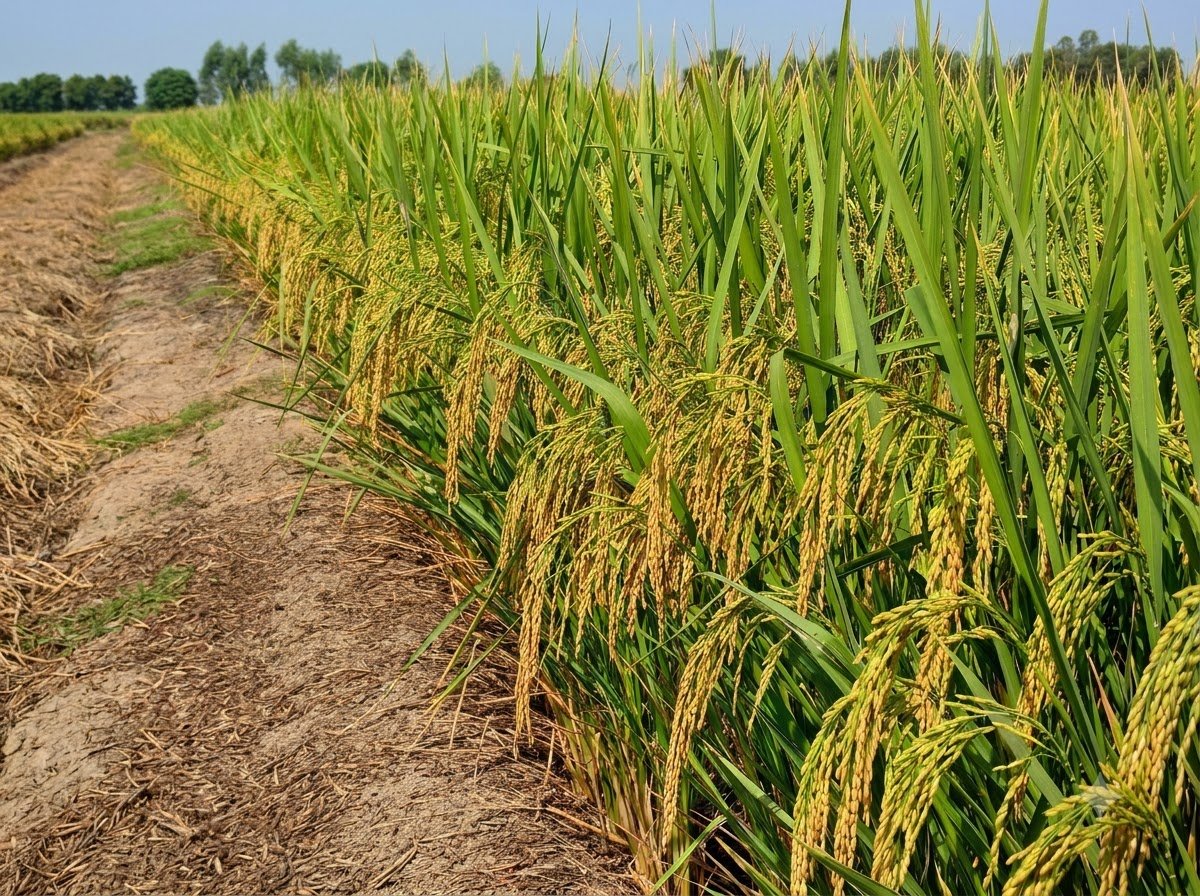
Soil fertility on an organic basmati farm is rebuilt rather than force-fed: rotations with mung bean, urad or chickpea fix nitrogen naturally, while composted farmyard manure, vermicompost and Sesbania green manure replace synthetic fertilizer entirely. Pest management leans on light traps, pheromone lures for stem borer, neem-derived sprays and simply protecting natural predator populations like spiders and dragonflies rather than blanket spraying.
Because standing water late in the season can wash out the volatile aroma compounds the crop is prized for, drainage is timed carefully around the grain-filling stage. The entire sequence, from the seed packet to the export container, is logged in a traceability record that a US importer can request and match against the lot number on their own shipment.
3. Nutrition Facts: What's Actually in Organic Basmati White Rice
A typical 100-gram serving of cooked Organic Basmati White Rice supplies roughly 121–150 kcal, 25–28 g of carbohydrate, 2.6–3.0 g of protein, 0.3–0.5 g of fat, and 0.4–0.6 g of fiber, along with modest amounts of manganese, selenium, thiamin and niacin. Because milling removes the bran and germ, the mineral and fiber content sits below brown basmati, but the grain is correspondingly gentler on digestion and cooks in roughly half the time.
The chart below breaks the caloric contribution down by macronutrient rather than by weight, which is usually the more useful view for meal planning: almost all of the energy in a serving comes from carbohydrate, with a small but meaningful protein contribution and only a trace of fat.
Per 100 g cooked serving of Organic Basmati White Rice — share of total calories, not grams.
Figures are typical values and vary with crop year and cooking water absorption; aging tends to raise the resistant-starch share slightly, which is not separately broken out here.
Rice is one of the few staple grains with no naturally occurring gluten, so Organic Basmati White Rice fits gluten-free, low-FODMAP and many elimination-diet protocols without modification. Buyers building allergen-labeled SKUs should still confirm the mill runs a documented gluten-free handling procedure, since cross-contact risk lives in the facility, not the grain itself.
4. Organic vs Conventional Basmati & the Grain Quality Profile
“Organic” describes how the crop was grown, and it doesn't automatically change grain length, aroma intensity or cooking behavior — those come primarily from variety and aging. What organic farming reliably changes is input use, residue load and traceability, which is exactly what most US buyers are actually trying to verify.
| Factor | Organic Basmati White Rice | Conventional Basmati |
|---|---|---|
| Synthetic pesticide use | Prohibited for 3+ years before harvest | Permitted within label limits |
| Fertility inputs | Compost, green manure, biofertilizers | Synthetic NPK commonly used |
| Certification required | USDA NOP and/or NPOP, audited annually | None required for basic export |
| Lot traceability | Full farm-to-container chain of custody | Varies by exporter |
| Typical residue testing | Routine third-party screening | Buyer-requested only |
Grain quality itself is best compared attribute by attribute rather than as a single score. The radar chart below plots Organic Basmati White Rice against ordinary long-grain white rice across five buyer-relevant attributes, each scored on a 0–100 relative scale.
Organic Basmati White Rice vs Regular Long-Grain White Rice, scored 0–100 on each attribute.
Basmati's advantage is concentrated in aroma, grain length and elongation; ordinary long-grain white rice scores comparably on digestibility since both are milled, low-fiber grains.
5. USDA Organic Certification, Explained for Rice Buyers
In the United States, “organic” is a regulated legal claim under the USDA National Organic Program, codified at 7 CFR Part 205 — not a marketing adjective a supplier can apply on its own. Selling Organic Basmati White Rice under that label means every operation that touched the rice, from farm to final packer, must be certified under the NOP or an equivalent recognized standard.
That's where India's NPOP comes in. Under a formal US–India organic equivalence arrangement, rice grown and handled by NPOP-certified Indian operations can be sold as organic in the US without a duplicate on-site USDA inspection. Reputable exporters still typically hold both certifications — NPOP through an accredited Indian certifier such as Control Union, Ecocert, OneCert or Lacon, and USDA NOP through that same certifier's NOP-accredited division — to remove any ambiguity at the port.
Before accepting any shipment, a US buyer should ask for:
- A lot-specific NOP transaction certificate tied to the exact container or bag lot, not a generic company-wide certificate
- Current organic certificates for the grower group, the mill, and the exporter
- A traceability report linking the shipment back to the certified farm group and harvest year
- Confirmation of the certifying agency's accreditation on the USDA's public Organic Integrity Database
Under 7 CFR 205.300–205.307, a product can only carry the USDA organic seal or the “100% organic” claim if no non-organic ingredient has been added at any processing step, which is the normal case for plain milled Organic Basmati White Rice sold in bulk. Importers and private-label brands are required to keep these records on file for at least five years in case of an NOP compliance audit.
6. Glycemic Index & Health Considerations
The most common health question buyers ask about basmati is where it lands on the glycemic index. Aged Organic Basmati White Rice typically scores in the 50–58 range when boiled and drained — the low-to-medium band — which is noticeably lower than the 70–75 typical of ordinary long-grain white rice. The gauge below shows where a representative sample sits, along with quick comparison figures for other common rice types.
Boiled and drained. Lower on the dial means a slower post-meal blood-sugar rise.
This is general nutrition information, not medical advice. Individuals managing diabetes or blood-sugar targets should confirm portion guidance with a physician or registered dietitian.
Beyond glycemic response, three other factors matter to health-conscious US buyers. First, digestibility — low fiber and phytate content make milled basmati gentle on sensitive digestive systems, which is why it's a common bland-diet and early-solid-food staple. Second, arsenic — basmati grown on Himalayan snowmelt irrigation tends to accumulate less inorganic arsenic than rice grown in some other regions, though buyers sourcing at volume should still request a third-party heavy-metals panel per lot. Third, residue load — because organic production prohibits synthetic pesticide inputs for years before harvest, routine screening on certified organic lots consistently shows lower residue frequency than on conventional rice.
7. How to Cook Organic Basmati White Rice
Good basmati technique is mostly about restraint: rinse well, soak briefly, use the right ratio, and then leave the pot alone. The absorption method below is the standard approach for everyday fluffy, separate-grain rice.
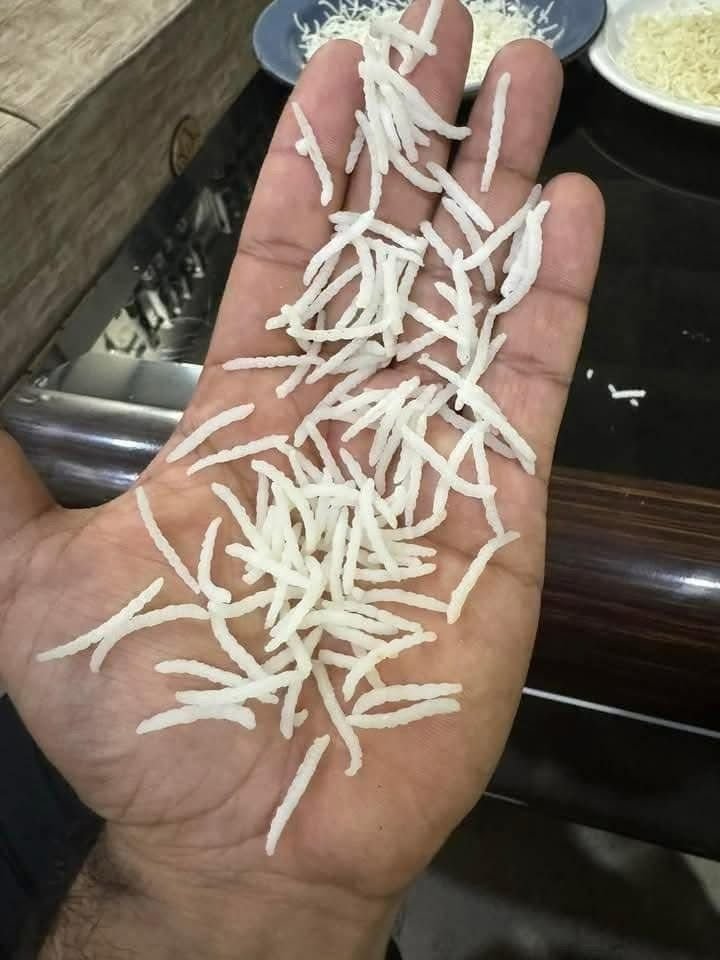
The single most common mistake is over-measuring water “to be safe.” Aged basmati needs less liquid than most long-grain rice; too much water is what produces the mushy, clumped result buyers sometimes blame on the rice itself.
8. Step-by-Step: Importing Organic Basmati White Rice Into the United States
Getting Organic Basmati White Rice cleared at a US port involves several federal touchpoints that need to line up in sequence. The flow below outlines the typical order of operations for a first-time importer.
Six checkpoints, in the order a shipment typically moves through them.
FDA and CBP may pull samples for pesticide or microbiological screening on any organic lot, so keeping all six documents together speeds clearance.
9. Bulk Packaging & Wholesale Supply Options
US buyers of Organic Basmati White Rice source anywhere from a single retail pallet to multiple container-loads a month, and packaging format usually tracks order size. Rather than pricing, the chart below shows how packaging density scales — how many bags of each format make up one metric ton.
Each highlighted square represents one bag needed to reach 1 MT in that format.
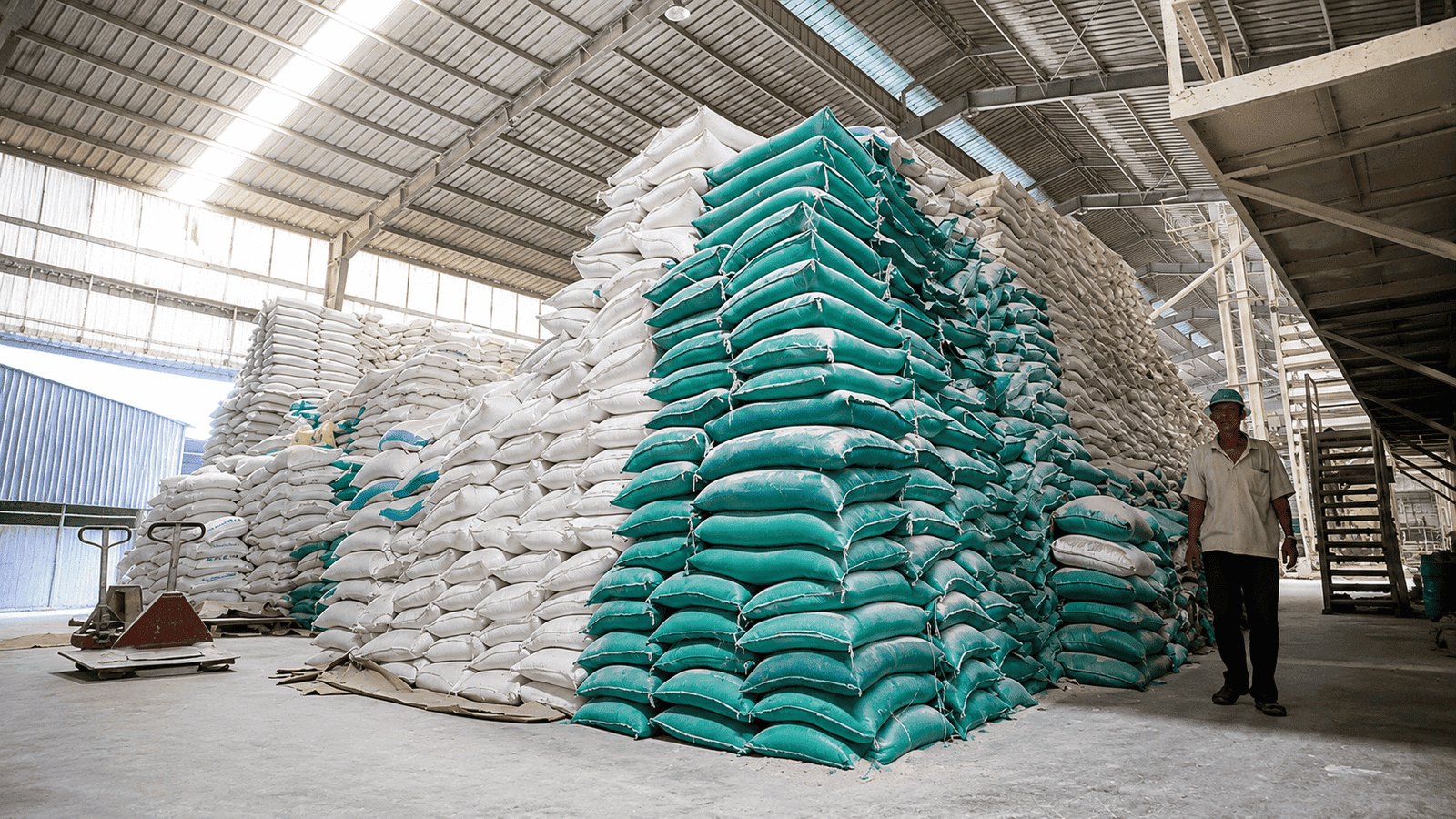
A 20-ft FCL typically carries about 19–21 MT of bagged basmati; a 40-ft FCL carries roughly 26–28 MT, depending on bag size and stowage.
Retail and foodservice tiers. 1 kg and 5 kg food-grade pouches serve grocery retail and small foodservice accounts; 10 kg and 25 kg bags cover restaurants and institutional kitchens. All retail-facing organic packaging must use FDA-compliant materials free of prohibited treatments.
Wholesale and industrial tiers. 25 kg and 50 kg PP woven bags remain the standard for US distributors, typically palletized at 1.0–1.2 MT per pallet. 1 MT FIBC jumbo bags suit co-packers and large institutional buyers who want to minimize handling and pallet count.
Minimums and lead times. Wholesale minimum order quantity generally starts at 1 MT; private-label retail runs often require 5–10 MT because of packaging-film and print-plate minimums. From confirmed purchase order to vessel departure, plan on 4–6 weeks for stock inventory and 8–10 weeks for private-label production, plus roughly 25–35 days of sea transit to US East Coast ports.
10. Frequently Asked Questions
Questions we hear most often from US importers, distributors and retail brands evaluating Organic Basmati White Rice.
It refers to milled, polished basmati rice grown on land free of prohibited synthetic pesticides, herbicides and fertilizers for at least three years, handled under a documented organic system plan, and certified under USDA NOP and/or India's NPOP. The word “white” simply describes the milling step that removes the bran and germ, separate from the organic growing method itself.
Organic basmati white rice is grown without synthetic agrochemical inputs, so third-party residue testing typically shows markedly lower pesticide residue than conventionally grown basmati. Aroma, grain length and cooking behavior depend mainly on variety and aging rather than farming method, so a well-aged organic and a well-aged conventional basmati can taste similar; the meaningful difference is input use, traceability and certification, not flavor alone.
Ask the supplier for a lot-specific NOP transaction certificate, the current organic certificates for the grower group, mill and exporter, and confirm the certifying agency's accreditation on the USDA's public Organic Integrity Database. Legitimate exporters can produce this paperwork for any single container or bag lot on request, tied to a traceable batch or lot number.
For the absorption method, use 1 cup of rinsed, soaked rice to 1.5 cups of water, simmered covered for 12–14 minutes. Soaking the rice for 20–30 minutes beforehand allows a slightly lower ratio, closer to 1:1.25, and produces longer, more separate grains once cooked.
Organic certification, buffer-zone farming, segregated milling and longer aging generally add cost versus conventional basmati, but exact figures depend on crop year, aging period, grade and order volume, so we do not publish fixed pricing. Contact our export desk with your target volume and packaging format for a current wholesale quote.
Properly milled and packed organic basmati white rice keeps its quality for roughly 24–36 months from the milling date when stored below 20°C and 60% relative humidity in an airtight, food-grade container away from direct light and strong odors. Always check the milling date on the certificate, since shelf life is counted from milling, not from the harvest year.
Yes. Most exporters, including our export desk, can arrange small sample parcels or courier samples so a buyer can evaluate aroma, cooking quality and packaging before placing a full container or pallet order. Full wholesale minimum order quantities typically begin at 1 metric ton once a buyer is ready to move forward.
Yes. Rice is naturally gluten-free, and organic basmati white rice is grown without synthetic pesticide inputs, which supports both gluten-free labeling programs and low chemical-residue sourcing requirements. Buyers with strict allergen programs should still confirm the mill's documented gluten-free handling procedures to rule out cross-contact with other grains.
11. Final Thoughts
Organic Basmati White Rice sits at the intersection of a protected regional variety, careful aging, and audited organic production — three separate things that all have to line up for the claim on the bag to actually hold up at a US port. Grain length and aroma tell you about variety and aging; the paperwork tells you about the organic claim. A buyer who checks both is far less likely to run into a certification gap or a port hold.
If your team is evaluating suppliers, the fastest way to compare them is side by side on the same documentation checklist: lot-specific NOP transaction certificate, current mill and exporter certificates, and a traceability report back to the farm group. Our export desk can walk your team through samples, documentation and a tailored supply plan.
Sourcing Organic Basmati White Rice?
Get full USDA NOP, NPOP & APEDA documentation with your quote, plus sample availability for new US accounts. Our export desk replies within one business day.