
1. What Is Organic Brown Basmati Rice?
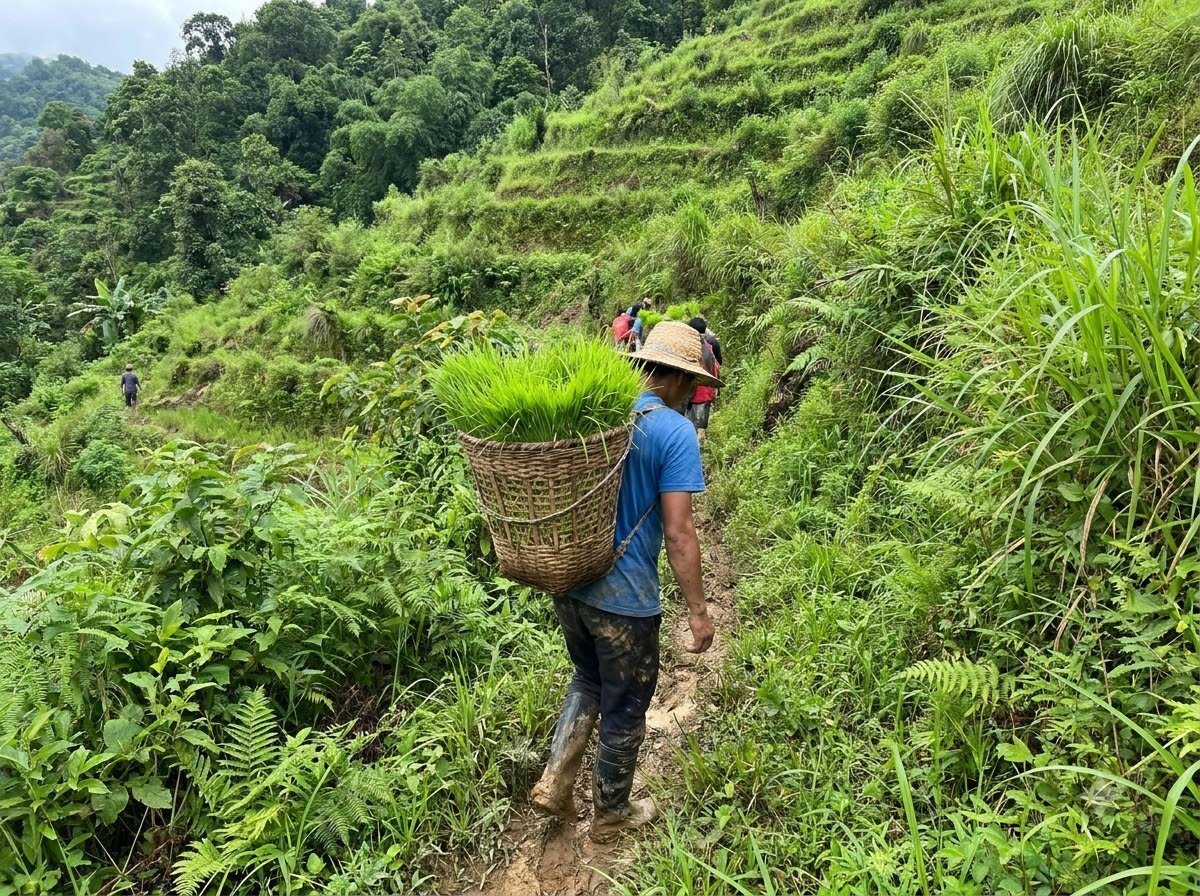
Organic Brown Basmati Rice is the whole-grain version of the same celebrated long-grain aromatic rice grown at the foothills of the Himalayas, across the Indian states of Punjab, Haryana, Himachal Pradesh, and Uttarakhand, along with select growing districts of Pakistan. The key difference from its polished cousin is milling: after harvest, brown basmati is husked to remove only the inedible outer hull, and the process stops there. The bran layer and the germ — both stripped away to make white basmati — stay fully intact.
Every basmati kernel, brown or white, has to meet the same varietal benchmarks: an average uncooked length of at least 6.61 mm, an elongation ratio of 1.7 times or more once cooked, and the signature aroma driven by 2-acetyl-1-pyrroline, the compound that also gives fresh bread its smell. Because the bran layer is still wrapped around the grain, raw Organic Brown Basmati Rice runs a touch shorter than fully milled white basmati — typically 6.5 mm to 7.0 mm — and carries a light tan-gold hue rather than an ivory-white one.
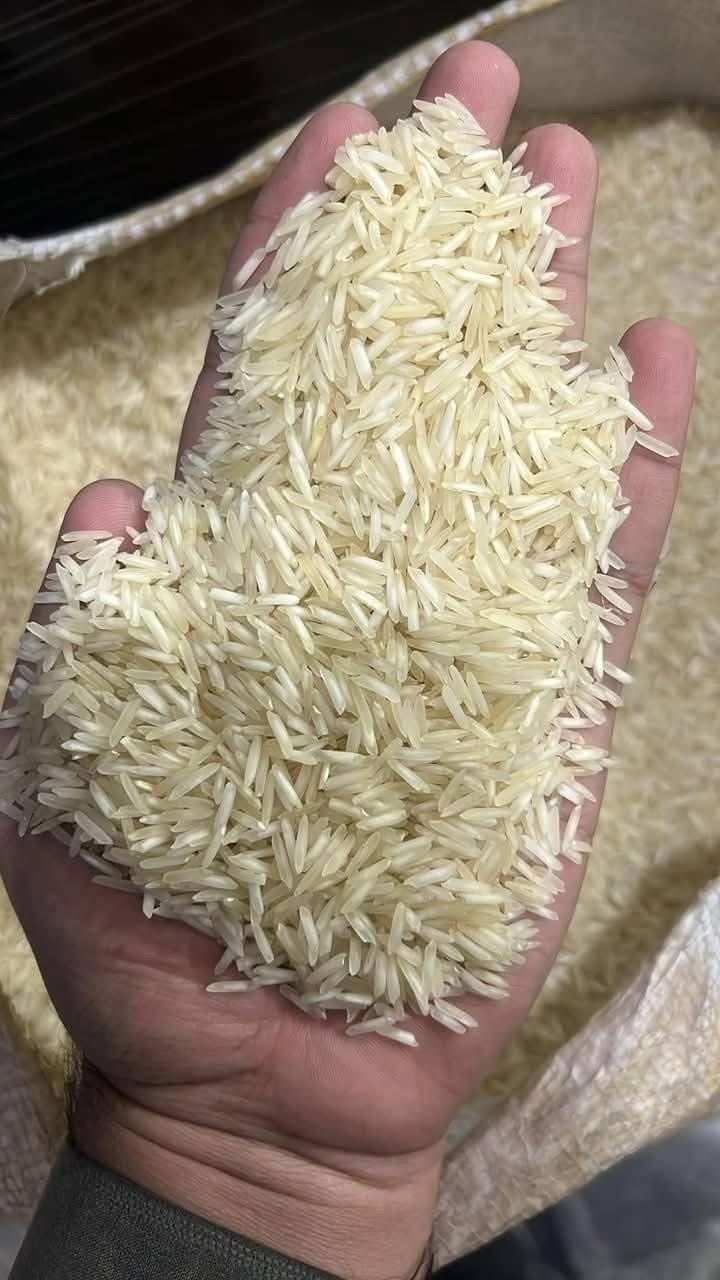
Keeping the bran and germ in place means Organic Brown Basmati Rice carries noticeably more fiber, B-vitamins, magnesium, and manganese than its milled counterpart, along with plant compounds such as gamma-oryzanol that never survive the polishing process used for white rice. The trade-off is a longer cook time, a chewier, nuttier bite, and a shorter shelf life — the bran's natural oils are nutritious but can turn rancid faster than starch alone.
To be sold as “organic” in the United States, the crop must be cultivated without synthetic pesticides, herbicides, or chemical fertilizers for at least three years before harvest, and handled under a certified organic system plan that keeps it fully segregated from conventional grain at every stage. Finished lots of Organic Brown Basmati Rice typically carry certification under the USDA National Organic Program (NOP), India’s NPOP, and frequently EU organic equivalence as well.
2. How Organic Brown Basmati Rice Is Grown & Milled
The cultivation side of Organic Brown Basmati Rice mirrors what it takes to grow any certified organic basmati crop. Fields must go through a minimum 36-month transition free of prohibited inputs before the first certified harvest, with 8–10 meter buffer zones separating organic paddies from conventional neighbors. Farmers rely on certified organic seed, crop rotation with legumes such as mung bean and chickpea, composted farmyard manure and vermicompost for fertility, and non-chemical pest control — pheromone traps, neem-based formulations, and conservation of natural predators.
Where the two products genuinely diverge is at the mill. White basmati goes through hulling, then polishing passes that strip away the bran and germ. Organic Brown Basmati Rice stops after hulling — a single pass that removes only the husk, leaving the nutrient-rich bran and germ layers on the kernel. Because less mechanical processing is involved, brown basmati is sometimes described as the more “minimally processed” of the two, though both are milled in facilities that maintain full organic traceability under NPOP, USDA NOP, and EU standards.
Aging still plays a role, but differently than it does for white basmati. Traditional aging of 9–24 months develops aroma and elongation in white basmati because there is little fat left in the milled kernel to oxidize. Brown basmati contains bran oil, so exporters generally age it for a shorter window — often just a few months after milling — before packing, since prolonged storage risks oxidizing those oils and dulling the rice’s fresh, nutty aroma. Reputable exporters compensate with vacuum-sealed or nitrogen-flushed packaging to slow that oxidation between the mill and the US buyer’s warehouse.
3. Nutritional Profile of Organic Brown Basmati Rice
A 100-gram serving of cooked Organic Brown Basmati Rice provides approximately 119 kcal, 23 g of carbohydrate (including about 1.8 g of dietary fiber), 2.7 g of protein, and 0.9 g of fat, along with meaningful amounts of magnesium, manganese, phosphorus, and B-vitamins such as niacin and B6. Raw, unmilled brown basmati runs closer to 370 kcal, 76 g carbohydrate, 7.9 g protein, and 3.5 g fiber per 100 g — more than three times the fiber of raw white basmati.
Share of calories from each macronutrient in cooked Organic Brown Basmati Rice.
Of the 23 g of carbohydrate, roughly 1.8 g is dietary fiber — nearly all of it retained from the bran layer that white basmati has milled away. Values are typical figures and will vary by crop year and cooking method.
Minerals are where Organic Brown Basmati Rice separates most clearly from milled white rice. The bran layer concentrates magnesium, manganese, and phosphorus, all of which are largely lost when a grain is polished. The chart below compares raw, uncooked values for Organic Brown Basmati Rice against Organic White Basmati Rice and a generic non-basmati brown rice.
Organic Brown Basmati vs Organic White Basmati vs Regular Brown Rice — typical values, USDA FoodData Central
Bars are scaled within each metric group to the largest value of that group. Organic Brown Basmati sits close to generic brown rice on minerals and fiber while still delivering basmati's characteristic aroma and grain length — something plain brown rice doesn't offer.
4. Organic Brown Basmati vs Other Rice Varieties
Buyers building out a whole-grain or specialty-rice line often ask how Organic Brown Basmati Rice compares with white basmati, plain brown rice, red rice, black rice, and wild rice. Milling level, grain length, and culinary role all shift the comparison.
| Variety | Grain Length | Aroma | Texture | Best Use |
|---|---|---|---|---|
| Organic Brown Basmati | 6.5–7.0 mm | Nutty, aromatic | Chewy & hearty | Grain bowls, health-focused biryani, meal prep |
| Organic White Basmati | 7.5–8.4 mm (longest cooked) | Nutty, popcorn-like | Fluffy & separate | Biryani, pulao, pilaf, gourmet |
| Regular Brown Rice | 6.0–7.0 mm | Mild, earthy | Firm & chewy | Everyday whole-grain meals |
| Red Rice | 5.5–6.0 mm | Earthy, nutty | Firm, slightly sticky | Salads, health bowls |
| Black (Forbidden) Rice | 6.0–6.5 mm | Nutty, slightly sweet | Chewy, sticky | Desserts, specialty blends |
| Wild Rice | 10–15 mm | Smoky, earthy | Firm & chewy | Stuffings, salads, blends |
Organic Brown Basmati occupies the sweet spot between plain brown rice and its own milled sibling: it keeps the fiber and minerals of a whole grain while still delivering the length, aroma, and elongation that define authentic basmati. Regular brown rice is a fine everyday whole grain but lacks basmati's fragrance. Red and black rice bring their own antioxidant pigments and are typically used for color contrast or specialty applications rather than as a biryani base. For US retail brands positioning a “whole grain aromatic rice” SKU, Organic Brown Basmati Rice is usually the closest match to what shoppers are looking for.
5. USDA Organic Certification: What It Means for US Buyers
For any shipment entering the United States, the word “organic” is a regulated legal claim under the USDA National Organic Program (NOP), codified at 7 CFR Part 205. To be marketed as Organic Brown Basmati Rice on a US shelf or in US foodservice, the rice must come from operations certified under NOP or under a foreign standard the USDA recognizes as equivalent.
India’s National Programme for Organic Production (NPOP) holds that equivalence recognition for production and handling, so basmati grown and milled under NPOP-certified Indian operations can carry an organic claim in the US market without a separate on-site USDA inspection. Established exporters typically hold both NPOP certification — through accredited bodies such as Lacon, Ecocert, Control Union, or SGS — and USDA NOP certification through those same certifiers’ NOP-accredited divisions, which keeps documentation consistent across both markets.
Before accepting a shipment, US buyers should confirm the exporter can supply:
- Current organic certificates covering the farm group, the mill, and the exporter
- An organic transaction certificate (OTC) tied to the specific shipment lot
- A lot traceability report connecting the shipment back to the certified organic farm group
- The required “Certified Organic by [certifier]” statement for any retail packaging carrying the USDA seal
Labeling under 7 CFR 205.300–205.307 governs whether Organic Brown Basmati Rice may carry the USDA organic seal, a “100% organic” claim, or the “organic” (95%+) claim. Bulk brown basmati sold in 25 kg, 50 kg, or jumbo bag formats with no added non-organic ingredients typically qualifies as “100% organic.” Importers and private-label brands are expected to retain the full documentation trail for at least five years in case of a USDA NOP compliance audit.
6. Health Benefits of Organic Brown Basmati Rice
Because the bran and germ stay attached, Organic Brown Basmati Rice brings a different nutritional story than its milled counterpart — one built around fiber, minerals, and a gentler glycemic response.
First, glycemic impact. Organic Brown Basmati Rice has a glycemic index (GI) in the low range, typically 45–50 when boiled and drained — below white basmati (50–58), regular long-grain white rice (70–75), and jasmine rice (68–80). The combination of intact bran fiber and a slower starch-digestion rate contributes to this lower GI, making brown basmati a common choice for buyers building lower-glycemic or diabetic-friendly product lines.
Boiled & drained. Lower GI = slower, more gradual blood-sugar response.
GI values are typical published ranges; actual GI varies with cooking method, portion size, and what the rice is eaten with. Organic Brown Basmati is the only variety shown that lands solidly in the low band.
Second, fiber and digestion. With roughly 3.5 times the fiber of milled white basmati, Organic Brown Basmati Rice supports regularity and a longer feeling of fullness after meals. The added insoluble fiber does mean it is denser and takes longer to digest than white rice, so it is generally introduced gradually for anyone not used to a high-fiber diet.
Third, bran-layer antioxidants. The bran and germ retained in Organic Brown Basmati Rice contain gamma-oryzanol, tocotrienols, and phenolic compounds — plant antioxidants that are removed along with the bran during white rice milling. These compounds are one reason whole-grain rice is frequently positioned as the more nutrient-dense choice on ingredient panels.
Fourth, gluten-free status. Like all true rice, Organic Brown Basmati Rice is naturally gluten-free and suitable for people with celiac disease or wheat sensitivity, provided the milling and packing facility documents gluten-free handling procedures to prevent cross-contamination.
Finally, arsenic. All rice takes up naturally occurring arsenic from soil and irrigation water, and because arsenic concentrates in the outer bran layer, brown rice as a category typically tests somewhat higher in inorganic arsenic than milled white rice from the same crop. Himalayan-grown organic basmati generally tests lower than rice grown in the US Gulf states, but buyers of Organic Brown Basmati Rice — especially for infant food, high-consumption, or sensitive-population applications — should request a current third-party certificate of analysis for heavy metals with each lot rather than relying on general category averages.
7. How to Cook Perfect Organic Brown Basmati Rice
Organic Brown Basmati Rice rewards a little patience. The intact bran layer slows water absorption, so it needs more water, a longer soak, and a longer simmer than white basmati to cook through evenly without turning gummy on the outside or staying hard in the center.
Stovetop absorption method — Organic Brown Basmati vs Organic White Basmati vs Regular Brown Rice
Organic Brown Basmati needs meaningfully more water and about three times the simmer time of white basmati, but slightly less of both than a typical non-aromatic brown rice.
Step-by-step: stovetop absorption method
- Rinse. Measure one cup (about 190 g) of Organic Brown Basmati Rice and rinse briefly under cold water to remove surface dust. Brown rice carries less loose surface starch than white rice, so a quick rinse is enough.
- Soak. Soak the rinsed rice in fresh water for 4–8 hours, or overnight in the refrigerator. Soaking softens the bran layer, shortens the cook time slightly, and helps the grain cook through more evenly. A 30-minute warm-water soak works as a shortcut if you're pressed for time.
- Measure water. Use a 1:2 to 1:2.25 ratio of rice to water by volume for the absorption method. Add ½ teaspoon of salt and 1 teaspoon of fat (ghee, butter, or oil) per cup of rice.
- Cook. Bring to a boil over medium-high heat, then reduce immediately to the lowest simmer. Cover tightly and cook undisturbed for 35–45 minutes, until the water is absorbed and the grains are tender with a slight chew at the center.
- Rest. Remove from heat and let the covered pan rest for 10 minutes so residual steam finishes the cook evenly.
- Fluff. Fluff gently with a fork. Properly cooked Organic Brown Basmati Rice should be separate, chewy rather than mushy, and carry a distinct nutty, aromatic scent.
Pressure cooker shortcut: an electric pressure cooker brings Organic Brown Basmati Rice to the table in about 18–22 minutes on high pressure with a 10-minute natural release, using a 1:1.25 to 1:1.5 rice-to-water ratio since less liquid evaporates under pressure.
8. Importing Organic Brown Basmati Rice to the United States
Bringing Organic Brown Basmati Rice into the US market runs through the same set of federal agencies as any organic rice import, with a couple of details specific to the husked, unmilled form of the grain.
FDA Prior Notice
Under the Bioterrorism Act, prior notice must be filed electronically through FDA’s Prior Notice System Interface (PNSI) or via ABI/ACE before the shipment reaches a US port, generally no more than 30 days and no less than the time it takes the shipment to travel from origin. Organic Brown Basmati Rice is typically filed under FDA Product Code 34 — Cereal Preparations / Rice.
USDA Organic Compliance
Every shipment needs an NOP Transaction Certificate from a USDA-accredited certifier, and the US importer or first receiver must itself be certified organic (or operate under a certified organic system plan covering handling, storage, and segregation). Any private-label brand that wants to print the USDA organic seal on its own packaging must hold its own certification.
Phytosanitary Certificate
India’s Plant Protection Organization issues a phytosanitary certificate through APEDA confirming the shipment is free of quarantined pests. The original travels with the shipment, and both US Customs and Border Protection (CBP) and USDA APHIS review it at the port of entry.
APEDA Documentation
India’s Agricultural and Processed Food Products Export Development Authority (APEDA) regulates all basmati exports, brown or white. Exporters register each consignment through APEDA’s online Basmati Export Tracking System and obtain a Certificate of Origin; premium or first-time consignments may also require DNA-based basmati purity verification.
HS Code & Duties
Because Organic Brown Basmati Rice is husked but not further milled, it is generally classified under HS code 1006.20 (husked/brown rice), rather than 1006.30, which covers semi- or wholly-milled white rice. Most-favored-nation duty rates vary by trade agreement and change periodically, so importers should confirm current rates with their customs broker before finalizing a landed-cost estimate.
Port of Entry & Customs Clearance
Rice commonly enters through the Port of New York/New Jersey, Los Angeles/Long Beach, Houston, Savannah, or Oakland. Because brown basmati is more sensitive to heat and humidity than milled white rice, humidity-controlled drayage and prompt warehouse turnover matter more here. A formal CBP entry is filed through ACE with the commercial invoice, packing list, bill of lading, phytosanitary certificate, organic transaction certificate, and FDA prior notice confirmation; FDA and CBP may pull samples for pesticide or microbiological screening.
9. Bulk Sourcing, Packaging & Storage
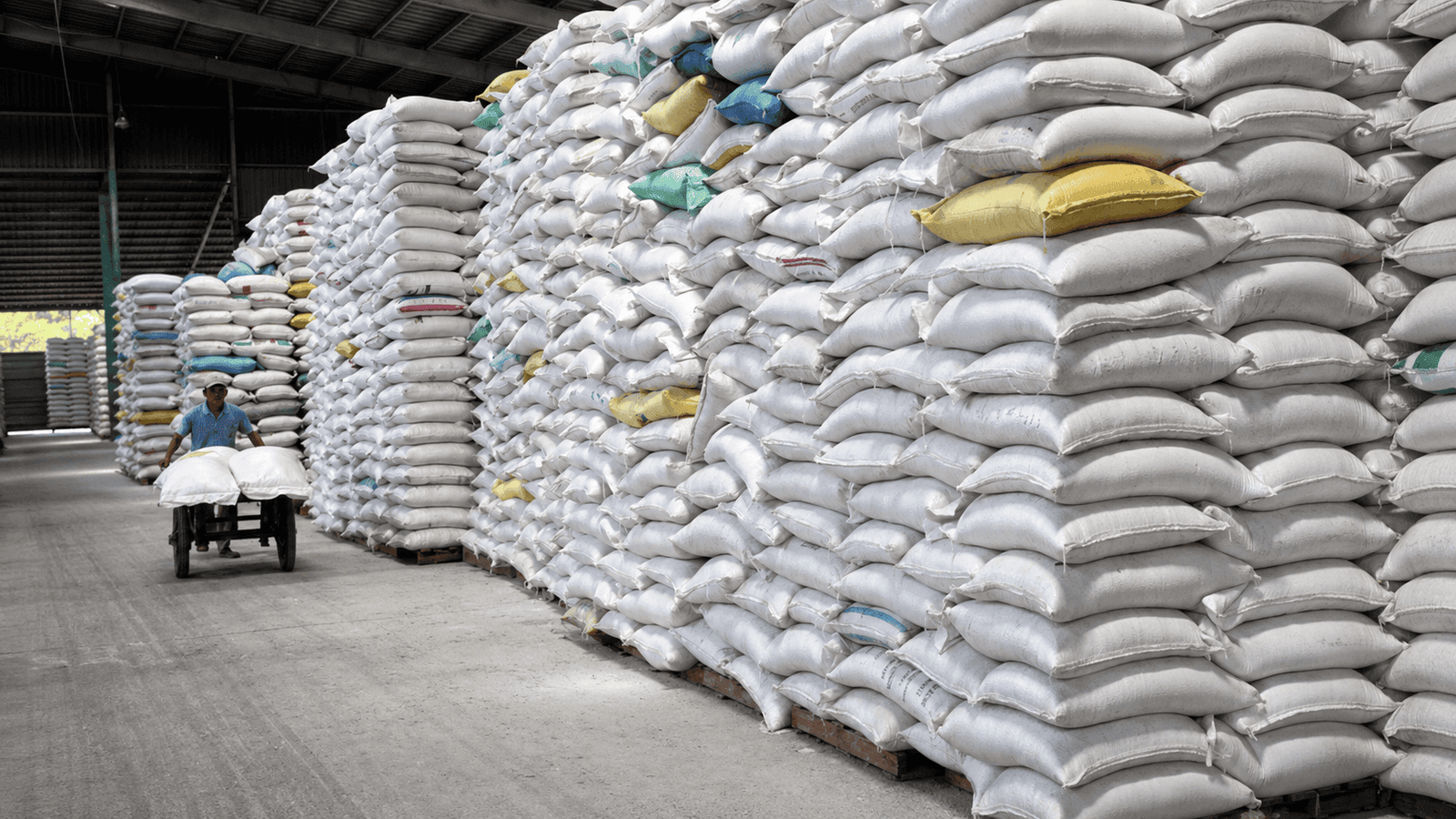
US buyers typically source Organic Brown Basmati Rice anywhere from a single pallet to multiple container-loads per month, and packaging formats scale to match.
Recommended consumption window on a 0–36 month scale from milling date.
Brown basmati's bran oils mean it is best used within about 6–12 months of milling, with peak aroma in the first few months. White basmati, having little oil left after polishing, can be aged for up to two years before it even reaches store shelves.
Five standard formats cover the full range of US buyer demand. Bag icons are scaled to relative size.
Retail packs of Organic Brown Basmati Rice are commonly vacuum-sealed or nitrogen-flushed, and sometimes fitted with an oxygen absorber, to slow bran-oil oxidation and extend on-shelf freshness.
Retail & foodservice tiers. 1 kg and 5 kg pouches, typically vacuum-sealed or nitrogen-flushed, serve retail grocery and health-food channels. 10 kg and 25 kg bags cover restaurants and institutional kitchens.
Wholesale tiers. 25 kg and 50 kg PP woven bags remain the standard for US distributors. A 20-foot FCL typically carries 18–22 MT depending on stowage.
Industrial tiers. 1 MT FIBC jumbo bags suit co-packers and large institutional buyers who will repackage on arrival.
Minimum Order Quantities. Wholesale MOQ for certified Organic Brown Basmati Rice typically starts at 1 MT. Private-label retail runs (1 kg and 5 kg) usually carry a higher MOQ, often 5–10 MT, due to printing plate and packaging-film minimums.
Lead Times & Storage. Expect 4–6 weeks from confirmed PO to vessel sailing for stock inventory, and 8–10 weeks for private-label runs. Sea transit to US East Coast ports runs 25–35 days. Because Organic Brown Basmati Rice has a shorter shelf life than white basmati, many buyers plan smaller, more frequent purchase orders rather than building large stockpiles, and store received inventory in a cool warehouse away from direct heat to protect the bran's natural oils.
10. Frequently Asked Questions
Common questions from US buyers, distributors, and retail brands evaluating Organic Brown Basmati Rice for their sourcing pipeline.
Yes. Organic Brown Basmati Rice is a whole-grain, gluten-free rice with more fiber, magnesium, and manganese than white basmati, plus a lower glycemic index of roughly 45–50 when boiled and drained. Because the bran and germ are left intact, it also carries plant compounds such as gamma-oryzanol that are removed during white rice milling. It is grown without synthetic pesticides for at least three years, so residue levels are negligible.
Brown basmati retains the bran and germ after husking, giving it more fiber (3.5 g vs 1.0 g per 100 g raw), more minerals, a chewier bite, a nutty flavor, and a longer cook time of 35–45 minutes. White basmati is milled further to remove the bran, producing a fluffier, faster-cooking rice with a milder flavor and a longer shelf life. Both come from the same basmati paddy and carry the same protected geographical indication.
Because the bran layer contains natural oils, Organic Brown Basmati Rice has a shorter shelf life than white basmati — typically 6–12 months when stored in a cool, dry, airtight container, versus 24–36 months for milled white basmati. Refrigeration or vacuum-sealed, nitrogen-flushed packaging can extend usable freshness closer to 12–18 months.
Yes. Organic Brown Basmati Rice is available in bulk formats including 25 kg and 50 kg PP woven bags, 1 MT FIBC jumbo bags, and 20-ft or 40-ft FCL container loads. Wholesale minimum order quantity typically starts at 1 metric ton, and private-label retail packaging in 1 kg and 5 kg formats is available for US grocery and health-food brands. Request a bulk quote here.
Yes. Like all true rice, Organic Brown Basmati Rice is naturally gluten-free and suitable for people with celiac disease or wheat sensitivity, provided the milling and packing facility follows documented gluten-free handling procedures to prevent cross-contamination with wheat, barley, or rye.
Like all rice, Organic Brown Basmati Rice naturally absorbs trace arsenic from soil and irrigation water, and because arsenic concentrates in the bran layer, brown rice typically tests somewhat higher than milled white rice from the same crop. Reputable Himalayan-grown organic basmati generally falls within FDA guidance levels; buyers who want assurance should request a current certificate of analysis for heavy metals with each lot.
Rinse the rice, then soak it for 4–8 hours or overnight to soften the bran layer. Cook using a 1:2 to 1:2.25 rice-to-water ratio, simmering covered for 35–45 minutes, then rest for 10 minutes before fluffing. An electric pressure cooker shortens this to about 18–22 minutes on high pressure with a natural release.
The best Organic Brown Basmati Rice comes from the same Himalayan-fed growing regions as white basmati — Punjab, Haryana, Himachal Pradesh, western Uttar Pradesh, and Uttarakhand in India, along with select districts of Pakistan. The cool nights and mineral-rich snowmelt irrigation from the Ganges and Yamuna give the grain its length and aroma, while minimal milling preserves the bran's nutrients.
11. Conclusion
Organic Brown Basmati Rice gives US buyers a rare combination: the aroma, length, and elongation of authentic basmati, paired with the fiber, minerals, and whole-grain positioning that today's health-focused shoppers are looking for. For retail brands, foodservice distributors, and importers alike, the value case is straightforward — a low-GI, gluten-free, whole-grain rice backed by USDA NOP certification and India's NPOP equivalence.
Understanding how it's grown, milled, certified, and imported — and planning for its shorter shelf life — lets buyers source Organic Brown Basmati Rice with confidence, whether the goal is a single retail SKU or a multi-container annual program. If your business is ready to source certified organic brown basmati, our export desk can provide full documentation, samples, and a tailored quote within one business day.
Ready to Source Organic Brown Basmati Rice?
Get a tailored quotation with full USDA NOP, NPOP & APEDA documentation. Our export desk responds to all US buyer inquiries within one business day.