
1. What Is Organic Brown Long Grain Rice?
Organic Brown Long Grain Rice is whole-grain rice that has been husked to remove the inedible outer hull but never polished, so the bran layer and germ stay attached to the endosperm. That single processing difference is what separates it from white long-grain rice, which goes through an additional milling step that strips away the bran, the germ, and most of the fiber and micronutrients that come with them.
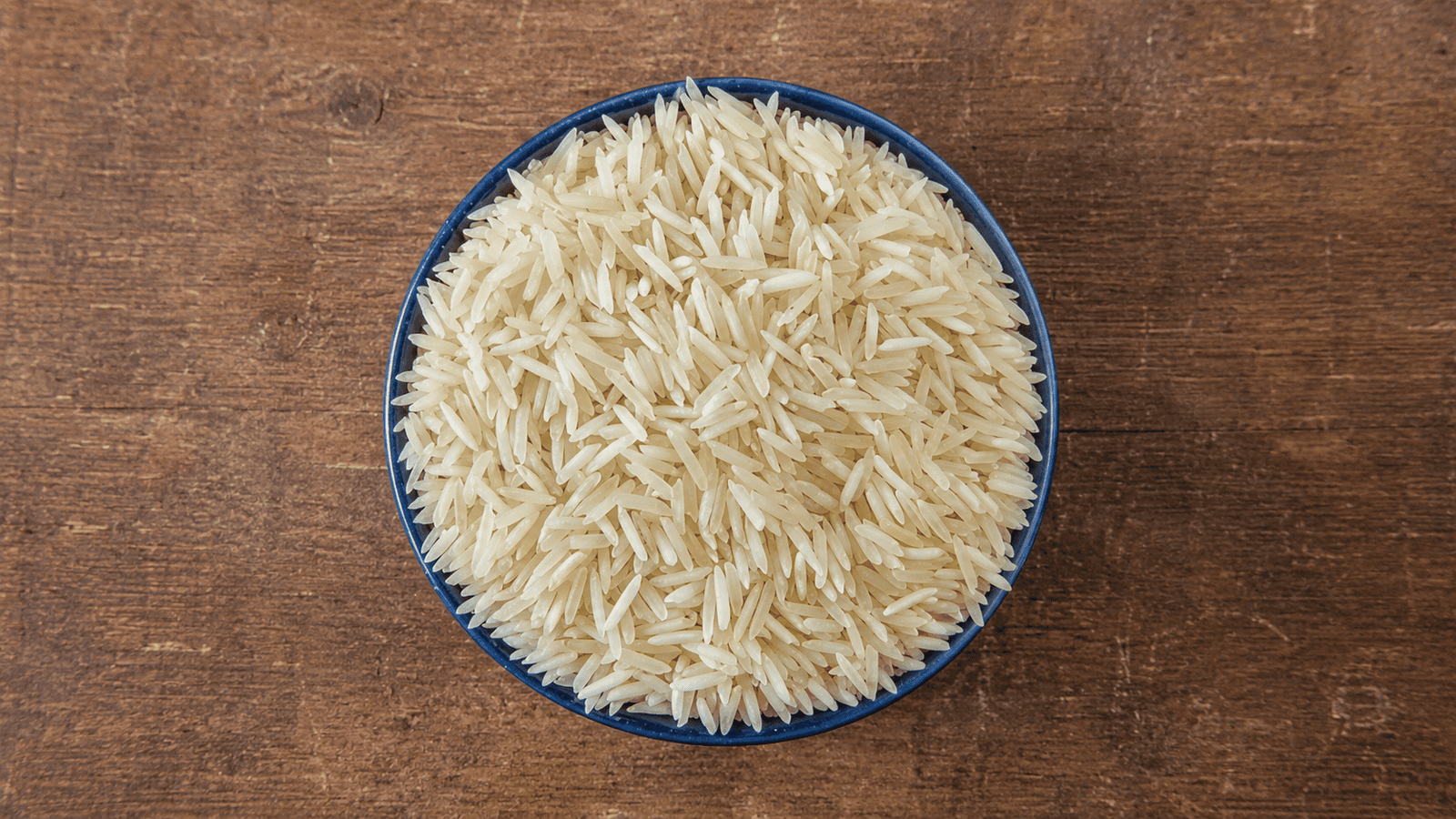
“Long grain” is a botanical classification rather than a marketing term. To qualify, the milled kernel must measure at least three times as long as it is wide, with raw grain lengths typically falling between 6.0 mm and 7.0 mm. This slender shape is what gives long-grain rice — brown or white — its characteristic behavior in the pot: the grains cook up separate and distinct rather than clumping together the way shorter, starchier medium- and short-grain rice tends to do.
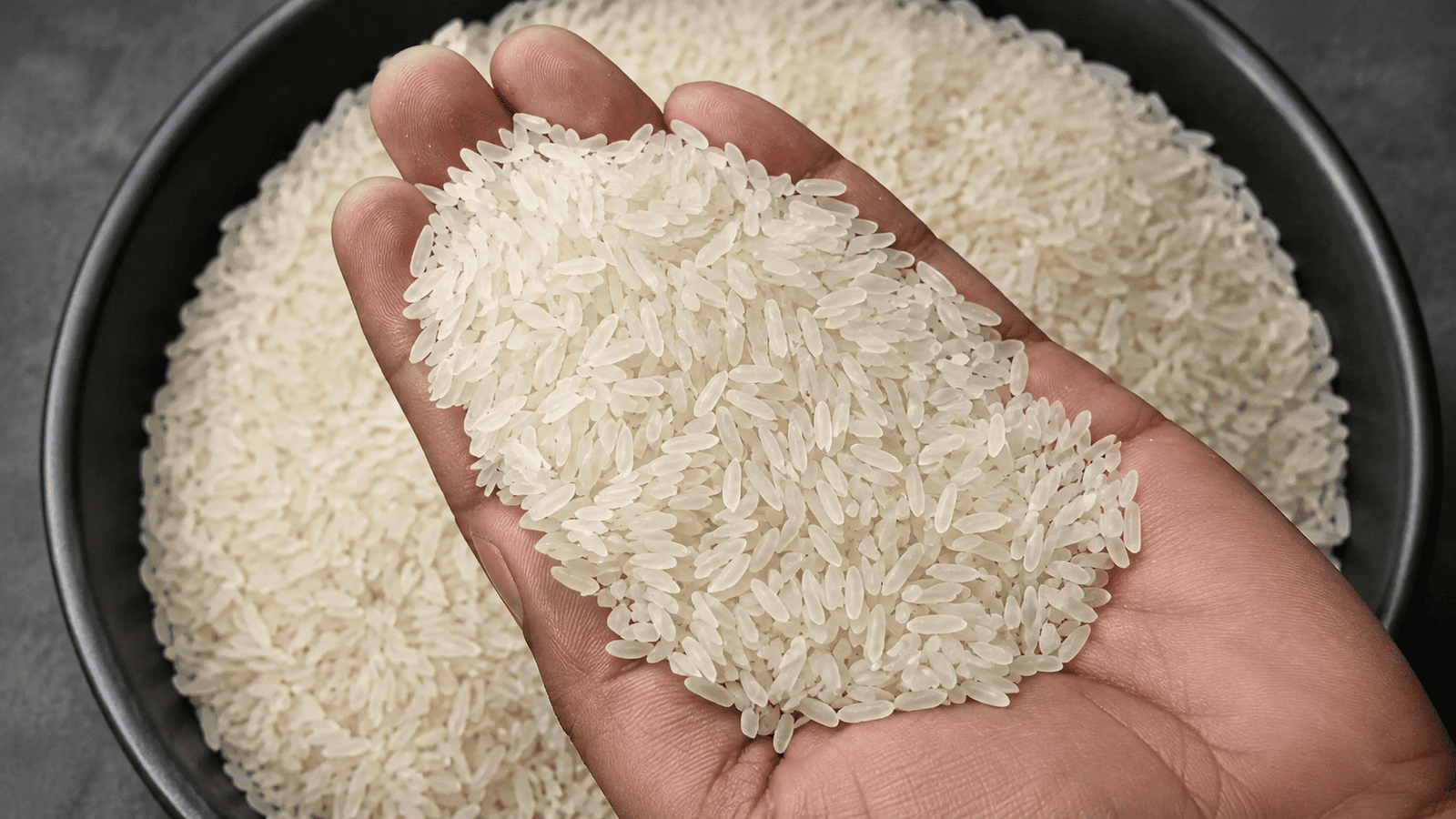
Because the bran is intact, raw Organic Brown Long Grain Rice has a light tan to golden-beige color rather than the bright white of milled rice, along with a subtle nutty aroma. Cooked, it has a firmer, chewier bite than white rice and takes noticeably longer to prepare, since the bran layer slows the rate at which water can reach the starchy interior of the grain.
For a shipment to carry the “organic” claim into the United States, the paddy must be grown without synthetic pesticides, herbicides, or chemical fertilizers for a minimum of three years before harvest, and the entire supply chain — from field to mill to export warehouse — must be certified under the USDA National Organic Program (NOP) or an equivalent standard such as India’s NPOP. Because Organic Brown Long Grain Rice skips the polishing step entirely, it is also, by definition, one of the least processed rice products a US buyer can source — an attribute that resonates strongly with the clean-label and whole-grain positioning many American retail and foodservice brands are building around today.
2. How Organic Brown Long Grain Rice Is Grown
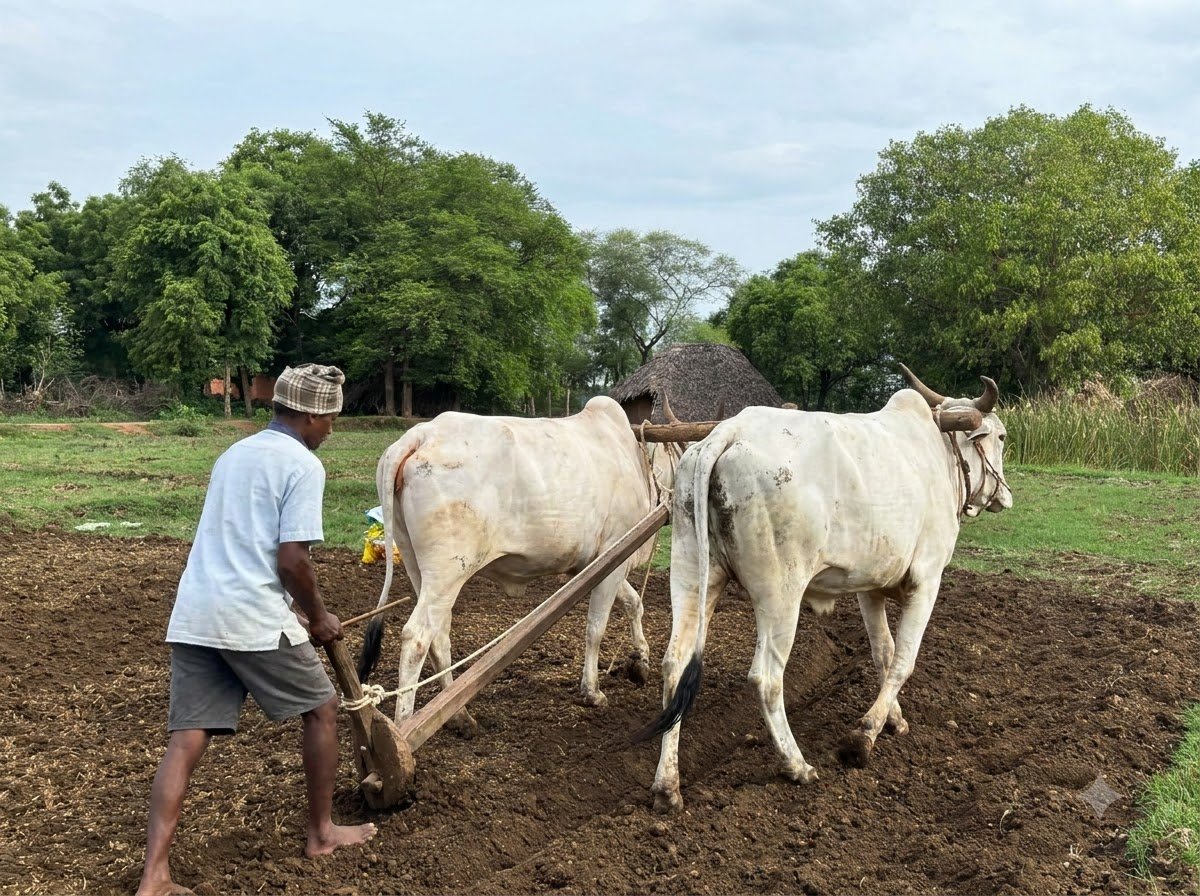
Long-grain non-basmati rice is cultivated across several of India’s major rice-growing states, including West Bengal, Chhattisgarh, Odisha, Andhra Pradesh, Punjab, and Haryana. Unlike basmati, which is tied to a specific Himalayan-foothill geography, long-grain varieties grown for Organic Brown Long Grain Rice are cultivated more broadly across these regions’ fertile river plains, using paddy transplanted during the kharif monsoon season between June and October.
Organic certification begins well before the first harvest that can legally be sold as organic. Fields must be free of prohibited inputs for at least 36 months, seed must come from certified organic stock, and buffer zones of 8–10 meters separate organic paddies from any conventionally farmed neighboring land. Soil fertility is built through crop rotation with legumes such as mung bean and chickpea, green manuring with Sesbania, composted farmyard manure, vermicompost, and biofertilizers containing nitrogen-fixing and phosphate-solubilizing bacteria. Pests are managed with light traps, pheromone traps, neem-based formulations, and by protecting natural predator populations rather than with synthetic chemical inputs.
At maturity, the crop is harvested and dried to a moisture content of roughly 13–14 percent before being stored in food-grade bags. Processing for Organic Brown Long Grain Rice stops at the sheller: the husk is removed, but the rice is never sent through the whitening cones and polishers used to make white rice, so the bran and germ remain intact. Because that bran layer contains natural oils that begin to oxidize once exposed to air, mills handling organic brown rice for export pay close attention to storage temperature, turnover speed, and packaging to preserve freshness between milling and shipment. Every stage of the process — from seed source to export lot — is documented in the traceability system required by NPOP, USDA NOP, and EU organic equivalence standards.
3. Nutritional Profile of Organic Brown Long Grain Rice
Because the bran and germ are never removed, Organic Brown Long Grain Rice retains a nutritional profile that white rice simply cannot match. A 100-gram serving of raw Organic Brown Long Grain Rice provides approximately 365–370 kcal, 77 g of carbohydrate, 7.5–8.0 g of protein, and roughly 3.5 g of dietary fiber — nearly three times the fiber found in the same weight of raw white long-grain rice. The bran also carries most of the grain’s natural oil content (around 2.5–3.0 g of largely unsaturated fat per 100 g), along with magnesium, manganese, selenium, and B-vitamins including thiamin, niacin, and B6.
For US meal planners, dietitians, and product developers, the most useful comparison is against regular white long-grain rice, brown basmati, and wild rice. The chart below summarizes typical per-100-gram raw values compiled from published USDA FoodData Central figures and Indian food composition references. Actual values vary somewhat by crop year, growing region, and moisture content at testing.
Organic Brown Long Grain vs White Long-Grain vs Brown Basmati vs Wild Rice — typical values, USDA FoodData Central
Bars are scaled within each metric group to the largest value of that group. Fiber is where the gap is widest — Organic Brown Long Grain Rice carries roughly 2.5–3 times the fiber of white long-grain rice because the nutrient-dense bran is never milled away.
Wild rice, technically the seed of an aquatic grass rather than a true rice, leads on protein and fiber in this comparison, but its distinctly smoky flavor and firmer bite mean it is more often used as a blending grain than an everyday staple — whereas Organic Brown Long Grain Rice works as a direct, drop-in upgrade to any recipe calling for white rice.
4. Organic Brown Long Grain Rice vs Other Rice Varieties
US buyers evaluating Organic Brown Long Grain Rice often want to see how it stacks up against white long-grain rice, brown basmati, brown jasmine, and wild rice before finalizing a sourcing decision. Milling, fiber content, texture, and best culinary use all factor into that choice.
| Variety | Milling | Fiber (per 100g raw) | Texture | Best Use |
|---|---|---|---|---|
| Organic Brown Long Grain | Husked only, bran & germ intact | 3.5 g | Firm, chewy, nutty | Grain bowls, pilafs, everyday whole-grain meals |
| White Long-Grain | Husked & polished | 1.3 g | Soft, fluffy, neutral | Everyday meals, foodservice |
| Brown Basmati | Husked only, aged | 3.5 g | Chewy, aromatic | Health-focused biryani, pulao |
| Brown Jasmine | Husked only | 2.8 g | Slightly sticky, floral | Asian whole-grain dishes |
| Wild Rice | Parched, husked (a grass, not true rice) | 6.2 g | Very firm, smoky | Stuffings, blends, salads |
The table highlights why Organic Brown Long Grain Rice tends to anchor “everyday whole-grain” SKUs — grain bowls, side dishes, meal-prep staples — rather than the more aromatic or specialty applications that basmati or jasmine typically serve. Its firm, separate texture and neutral-to-nutty flavor make it a versatile base grain that pairs well with almost any cuisine, which is part of why it remains one of the most consistently ordered whole-grain rice categories among US retail and foodservice buyers.
5. USDA Organic Certification: What It Means for US Buyers
To be legally sold as organic in the United States, Organic Brown Long Grain Rice must be produced and handled under the USDA National Organic Program (NOP), codified at 7 CFR Part 205, or under a foreign standard the USDA recognizes as equivalent.
India’s National Programme for Organic Production (NPOP) holds that equivalence recognition for crop production and handling, so brown long-grain rice grown and processed under NPOP-certified Indian operations can be marketed as organic in the US without a separate on-site USDA inspection. Most export-focused mills nonetheless carry both NPOP and USDA NOP certification through accredited certifiers such as Control Union, Ecocert, Lacon, SGS, or OneCert, since dual certification simplifies documentation for US buyers and reduces the chance of a customs hold.
Before confirming any purchase order, US buyers should request:
- Valid organic certificates for the producer group, the mill, and the exporter, covering the complete chain of custody
- An organic transaction certificate (OTC) or NOP transaction certificate specific to the shipment lot
- A lot traceability report linking the shipment back to the certified organic farm group
- The “Certified Organic by [certifier]” statement required on any retail packaging that will carry a private-label organic claim
Labeling rules under 7 CFR 205.300–205.307 govern whether a product can carry the USDA organic seal, the “100% organic” claim, or the “organic” (95%+) claim. Bulk Organic Brown Long Grain Rice sold in 25 kg, 50 kg, or jumbo bags with no added ingredients typically qualifies for the “100% organic” designation. Importers, distributors, and private-label brands are required to retain the underlying certification records for at least five years and make them available for USDA NOP compliance review.
6. Health Benefits of Organic Brown Long Grain Rice
Fiber and digestion. The roughly 3.5 g of fiber per 100 g of raw Organic Brown Long Grain Rice supports regular digestion and helps feed beneficial gut bacteria — a meaningful advantage over white rice, most of which loses its fiber-rich bran layer during milling.
Glycemic response. Whole-grain status also shows up in how the body processes it. Boiled and drained, Organic Brown Long Grain Rice generally falls in the 50–55 glycemic index (GI) range, compared with roughly 70–72 for regular white long-grain rice. Brown basmati sits a little lower still, typically 45–50, thanks in part to its usual aging period, while parboiled white rice lands in between the two.
Lower GI = slower blood-sugar response. Organic Brown Long Grain Rice sits in the low-to-medium band.
GI values are typical ranges from published studies; actual GI varies with cooking method, cooling, and cultivar. Cooling and reheating brown rice can further reduce its effective glycemic impact due to resistant-starch formation.
Micronutrients. The bran and germ that remain in Organic Brown Long Grain Rice also carry most of the grain’s magnesium, manganese, selenium, and B-vitamin content — nutrients involved in energy metabolism, bone health, and antioxidant enzyme function. None of these figures should be read as a substitute for a varied diet, but they do explain why whole-grain rice is generally favored over refined white rice in general nutrition guidance.
Gluten-free status. Like all true rice, Organic Brown Long Grain Rice is naturally gluten-free, which makes it appropriate for people with celiac disease or wheat sensitivity — provided it is milled and packed in a facility with documented gluten-free handling procedures to prevent cross-contact with wheat, barley, or rye.
Arsenic. One topic US buyers ask about directly is arsenic. All rice takes up naturally occurring arsenic from soil and irrigation water, and because arsenic tends to concentrate in the bran layer, brown rice generally tests higher in inorganic arsenic than white rice from the same crop and region. This is not unique to Organic Brown Long Grain Rice — it is a characteristic of brown rice as a category — but it is worth managing. Rinsing the raw rice thoroughly and cooking it in a larger volume of water that is later drained, rather than a tightly measured absorption ratio, can meaningfully reduce arsenic content. Buyers building retail or foodservice programs around brown rice, especially products marketed toward children, should request a third-party heavy-metals test for each import lot.
7. How to Cook Organic Brown Long Grain Rice
The intact bran layer that makes Organic Brown Long Grain Rice more nutritious also makes it slower to cook than white rice, since water has to work its way through that outer layer before it can hydrate the starchy center. Expect roughly double the cooking time of white long-grain rice and a bit more water per cup.
Organic Brown Long Grain Rice takes longer than white rice by any method — pressure cooking closes most of that gap.
Times are approximate and will vary with pot type, altitude, and how long the rice was soaked beforehand. A 10-minute rest after cooking is recommended for every method.
Brown rice needs more water than white rice for the same method — the intact bran absorbs less efficiently.
Pressure cooking loses far less water to evaporation, which is why the Instant Pot ratio is tighter than the stovetop or rice-cooker ratios.
Step-by-step: stovetop absorption method
- Rinse. Measure one cup (about 190 g) of Organic Brown Long Grain Rice and rinse it in a fine-mesh strainer under cold water for about 30 seconds to remove surface starch and any bran dust.
- Soak (optional). Soaking the rinsed rice in fresh water for 30–60 minutes shortens the eventual cook time by roughly 10–15 minutes and can improve the final texture.
- Measure water. Use a 1:2 ratio of rice to water for the stovetop absorption method (1 cup rice + 2 cups water). Add ½ teaspoon of salt and, if desired, 1 teaspoon of oil or butter per cup of rice.
- Cook. Bring to a boil over medium-high heat, then reduce immediately to the lowest simmer. Cover tightly and cook undisturbed for 40–45 minutes. Avoid lifting the lid, which lets steam escape and can leave the rice undercooked.
- Rest. Remove the pot from the heat and let it stand, still covered, for 10 minutes so the moisture can finish redistributing through the grain.
- Fluff. Fluff the rice gently with a fork before serving. Well-cooked Organic Brown Long Grain Rice should be tender but still hold a slight chew, with grains that separate rather than clump.
A rice cooker set to the brown-rice cycle uses a similar 1:2.25 ratio and typically finishes in 45–50 minutes. An electric pressure cooker such as an Instant Pot cuts that time to roughly 20–25 minutes at high pressure with a 10-minute natural release, using a tighter 1:1.25 ratio since less water is lost to evaporation under pressure.
8. Storage & Shelf Life of Organic Brown Long Grain Rice
The same bran oils that give Organic Brown Long Grain Rice its nutty flavor and higher nutrient content also make it more prone to turning rancid than white rice, which has had those oils milled away. Proper storage matters more here than it does for white rice.
Cold storage roughly doubles or triples usable shelf life compared with the pantry.
Ranges shown are typical figures for properly sealed, food-grade storage. Warm, humid conditions or a previously opened bag will shorten these windows.
Stored in an airtight, food-grade container in a cool, dark place below about 70°F (21°C) and 60 percent relative humidity, Organic Brown Long Grain Rice holds its quality for roughly 6–9 months. Refrigeration extends that to about 12–18 months, and freezing can push shelf life past 24 months, which is a common approach for importers and distributors holding larger inventories between production runs. Buyers and home cooks alike should give stored brown rice a quick smell check before use; a musty or slightly paint-like odor is a sign the oils have started to oxidize and the batch should be discarded rather than served.
For US distributors, this shorter shelf life compared with white rice is a planning consideration as much as a quality one — smaller, more frequent orders with faster turnover generally outperform large standing inventories of brown rice, and nitrogen-flushed or vacuum-sealed bulk packaging can meaningfully slow the oxidation process during ocean transit and warehousing.
9. Importing Organic Brown Long Grain Rice to the United States
Bringing Organic Brown Long Grain Rice into the United States involves coordinated compliance across multiple federal agencies. Understanding the process helps US importers, distributors, and private-label brands avoid costly port holds and certification gaps.
FDA Prior Notice
Prior notice must be filed electronically through the FDA’s Prior Notice System Interface (PNSI) or via ABI/ACE before the shipment arrives at a US port, generally no earlier than 30 days and no later than the time the cargo is en route. Organic Brown Long Grain Rice is typically filed under FDA Product Code 34 — Cereal Preparations / Rice.
USDA Organic Compliance
Each shipment must travel with an NOP Transaction Certificate issued by a USDA-accredited certifier. The importer, or first US recipient, must itself be certified organic under NOP, or operate under a documented organic handling plan covering storage and segregation. Any brand placing the USDA organic seal on retail packaging must hold its own certification.
Phytosanitary Certificate
A phytosanitary certificate issued by India’s Plant Protection Organization confirms the shipment is free of quarantined pests. The original certificate travels with the cargo and is reviewed by US Customs and Border Protection (CBP) and USDA APHIS at the port of entry.
APEDA Documentation
Because Organic Brown Long Grain Rice is a non-basmati product, it is not subject to APEDA’s Basmati Export Tracking System or basmati-specific DNA purity testing. Exporters instead register shipments under their standard APEDA Registration-cum-Membership Certificate (RCMC) and issue a Certificate of Origin for the consignment.
HS Code & Duties
The Harmonized System code for husked, unpolished rice is generally 1006.20. Duty rates vary by trade agreement and country of origin and can change, so importers should confirm current rates with a licensed customs broker before finalizing pricing with their own downstream customers.
Port of Entry & Customs Clearance
Major US entry points for bulk rice include the Port of New York/New Jersey, Los Angeles/Long Beach, Houston, Savannah, and Oakland. A formal CBP entry is filed through ACE (Automated Commercial Environment) with the commercial invoice, packing list, bill of lading, phytosanitary certificate, organic transaction certificate, and FDA prior notice confirmation. FDA and CBP may sample the shipment for pesticide residue, microbiological screening, or moisture content, the last of which is particularly relevant for brown rice given its oil content.
10. Bulk Sourcing & Packaging Options
US buyers of Organic Brown Long Grain Rice typically source anywhere from a single pallet to multiple container loads per month, and export packaging is built around that full range of demand.
Five standard formats cover the full spectrum of US buyer demand. Bag icons are scaled to relative size.
For Organic Brown Long Grain Rice, nitrogen-flushed liners or vacuum-sealed inner packaging are worth requesting on any tier to slow oxidation of the bran oils during transit.
Retail & foodservice tiers. 1 kg and 5 kg pouches serve retail grocery and small foodservice accounts, while 10 kg and 25 kg bags cover restaurants, institutional kitchens, and smaller distributors. All packaging materials used for organic rice must be food-grade and free of prohibited substances.
Wholesale tiers. 25 kg and 50 kg PP woven bags remain the standard workhorse format for US distributors. A 20-foot FCL typically carries 18–22 metric tons of bagged rice, depending on stowage and bag size.
Industrial tiers. 1 MT FIBC jumbo bags suit co-packers, re-packers, and large institutional buyers who want to minimize handling and pallet count. For Organic Brown Long Grain Rice specifically, nitrogen-flushed or vacuum-sealed inner packaging is worth requesting, since it slows oxidation of the bran oils during the several weeks a shipment spends at sea.
Minimum order quantities & lead times. Wholesale MOQ for certified Organic Brown Long Grain Rice typically starts at 1 metric ton, with container-load efficiency kicking in at 18–22 MT for a 20-ft FCL or 25–28 MT for a 40-ft FCL. Private-label retail packaging often carries a higher MOQ, commonly 5–10 MT, due to printing-plate and packaging-film minimums. From confirmed purchase order to vessel sailing, typical lead time runs 4–6 weeks for stock inventory and 8–10 weeks for private-label production, with sea transit to US East Coast ports averaging 25–35 days from Indian origins.
11. Frequently Asked Questions
Common questions from US buyers, distributors, and retail brands evaluating Organic Brown Long Grain Rice for their sourcing pipeline.
Yes. Organic Brown Long Grain Rice is a whole-grain rice that keeps its bran and germ intact, giving it roughly three times the fiber and more magnesium, manganese, and B-vitamins than white long-grain rice. It has a moderate glycemic index of 50–55 when boiled, and because it is grown without synthetic pesticides for at least three years, it is a clean, nutrient-dense carbohydrate for everyday meals.
White long-grain rice is milled to remove the bran and germ, leaving a soft, fluffy grain with a mild flavor and a fast 12–15 minute cook time. Brown long-grain rice keeps the bran and germ, so it has more fiber (about 3.5 g vs 1.3 g per 100 g), more protein, a firmer chewy bite, a nutty flavor, and a lower glycemic index, but it needs roughly 40–45 minutes to cook and has a shorter shelf life.
Brown rice generally contains more inorganic arsenic than white rice from the same crop, because arsenic naturally concentrates in the bran layer that is removed during milling. Rinsing brown rice thoroughly and cooking it in excess water that is later drained can lower arsenic levels meaningfully. Buyers can also request a third-party heavy-metals test for each import lot.
On the stovetop, organic brown long grain rice typically takes 40–45 minutes using the absorption method. A rice cooker on the brown-rice setting takes about 45–50 minutes, while an electric pressure cooker such as an Instant Pot can cook it in 20–25 minutes under pressure. Soaking the rice for 30–60 minutes beforehand can shave 10–15 minutes off the stovetop time.
Store organic brown long grain rice in an airtight, food-grade container in a cool, dark place below about 70°F (21°C) and 60% relative humidity. Because the bran layer contains natural oils, brown rice is more prone to turning rancid than white rice, so buyers holding stock for more than a few months should consider refrigeration or a nitrogen-flushed bulk package to slow oxidation.
Properly stored organic brown long grain rice keeps its best quality for about 6–9 months at room temperature, roughly 12–18 months refrigerated, and up to 24 months or more in the freezer. This is considerably shorter than white long-grain rice, which can last 2–3 years in the pantry, because the intact bran oils in brown rice gradually oxidize over time.
Yes. Organic Brown Long Grain Rice is available in 25 kg and 50 kg PP woven bags, 1 MT FIBC jumbo bags, and 20-ft or 40-ft FCL container loads. Wholesale minimum order quantities typically start at 1 metric ton, and custom private-label retail packaging in 1 kg and 5 kg formats is available for US grocery brands. Request a bulk quote here.
Yes. Like all true rice, organic brown long grain rice is naturally gluten-free and safe for people with celiac disease or wheat sensitivity, provided it is milled and packed in a facility with documented gluten-free handling procedures to prevent cross-contact with gluten-containing grains.
12. Conclusion
Organic Brown Long Grain Rice offers US buyers a genuinely whole-grain alternative to standard white rice — more fiber, more micronutrients, a lower glycemic response, and minimal processing, backed by USDA NOP certification and India’s NPOP equivalence. The trade-offs are real and worth planning around: longer cooking times and a shorter shelf life than white rice, both of which are manageable with the right cooking method and the right packaging and inventory approach.
For importers, distributors, and retail brands building out a whole-grain rice program, understanding cultivation, certification, storage, and the US import process up front helps avoid delays at the port and surprises on the shelf. If your business is ready to source certified Organic Brown Long Grain Rice, our export desk can provide documentation, samples, and a tailored quote within one business day.
Ready to Source Organic Brown Long Grain Rice?
Get a tailored quotation with full USDA NOP, NPOP & APEDA documentation. Our export desk responds to all US buyer inquiries within one business day.