
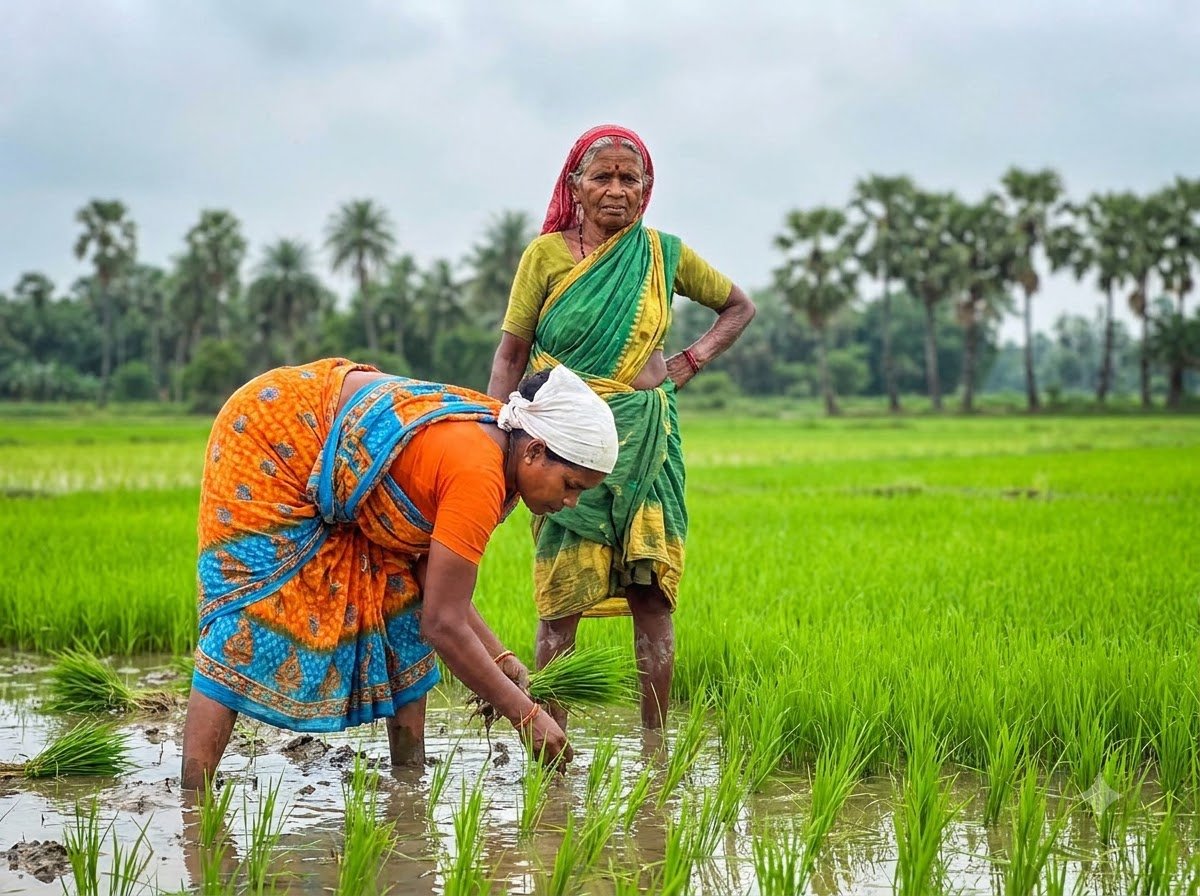
1. What Is Organic Long Grain Brown Rice?
Organic long grain brown rice is whole-grain rice defined by two separate things at once: a grain shape and a farming method. “Long grain” describes the geometry of the kernel — a length roughly three times its width or more — which is what makes the cooked grain stay slender, light and separate rather than clumping together. “Brown” describes how far the rice was milled: only the outer husk is removed, leaving the bran layer and the germ intact, so the grain keeps its tan color, its nutty flavor and most of the fiber and nutrients that milling strips away from white rice. “Organic” adds a third, entirely separate layer on top of both: the rice must be grown from certified organic seed, on land free of prohibited substances for a documented transition period, without synthetic pesticides, herbicides or chemical fertilizers, and handled through a certified organic supply chain from the paddy to the export bag.
In the United States, that organic claim is regulated by the USDA National Organic Program (NOP) under 7 CFR Part 205. Rice grown overseas is typically certified first under the origin country’s own organic program — India’s NPOP, for example — and recognized as equivalent to the USDA standard under a bilateral trade arrangement, which is why a bag grown and certified in India can carry a USDA-compliant organic claim on a US shelf without a second, duplicate certification process.
For US buyers, organic long grain brown rice sits at an intersection of two growing consumer trends: demand for whole grains with more fiber and micronutrients than polished white rice, and demand for cleaner-label, chemical-free agriculture. That combination has made it one of the steadier-growing categories inside the broader organic rice segment, appealing equally to health-focused retail shoppers, meal-prep and grain-bowl concepts in foodservice, and private-label brands looking for a defensible “organic” and “whole grain” claim on the same package.
2. Long Grain vs Medium & Short Grain Brown Rice
Grain length is not a marketing distinction; it is a measurable ratio that predicts how the rice will behave in a pot. Millers and graders classify rice by the length-to-width ratio of the milled kernel, and that ratio, more than color or milling degree, is the single biggest driver of texture.
| Grain Type | Length-to-Width Ratio | Texture When Cooked | Common Varieties | Best Use |
|---|---|---|---|---|
| Long Grain | 3:1 or greater | Light, fluffy, separate grains | Organic Long Grain Brown, Basmati Brown, Jasmine Brown | Pilafs, grain bowls, fried rice, side dishes |
| Medium Grain | 2:1 to 3:1 | Moist, tender, slightly clingy | Organic Brown Calrose-style, Valencia-style Brown | Risotto-style dishes, casseroles, stuffed vegetables |
| Short Grain | Under 2:1 | Soft, sticky, clumps together | Organic Brown Sushi Rice, Brown Sweet Rice | Sushi, onigiri, rice pudding |
Length-to-width ratio, illustrated proportionally, is what determines texture — not color or milling degree.
Long grain rice carries proportionally less amylopectin at the surface, which is the main reason the cooked grains stay separate instead of binding together.
None of the three is objectively “better” — each was bred and selected for a different kitchen job. Long grain organic brown rice is the workhorse for everyday plates: it reheats well, holds up in meal-prep containers, and doesn’t turn gummy when tossed with dressing or stir-fried. That versatility is a large part of why it’s the single most requested brown rice format among US foodservice and retail buyers.
3. How Organic Long Grain Brown Rice Is Grown & Milled
Cultivation starts with certified organic seed of a long-grain variety, planted on land that has been free of prohibited substances for a documented 36-month transition period. Fertility is built through crop rotation, composted manure, green manures and biofertilizers rather than synthetic nitrogen, and pest pressure is managed with pheromone traps, neem-based formulations and conservation of natural predators instead of synthetic pesticides.
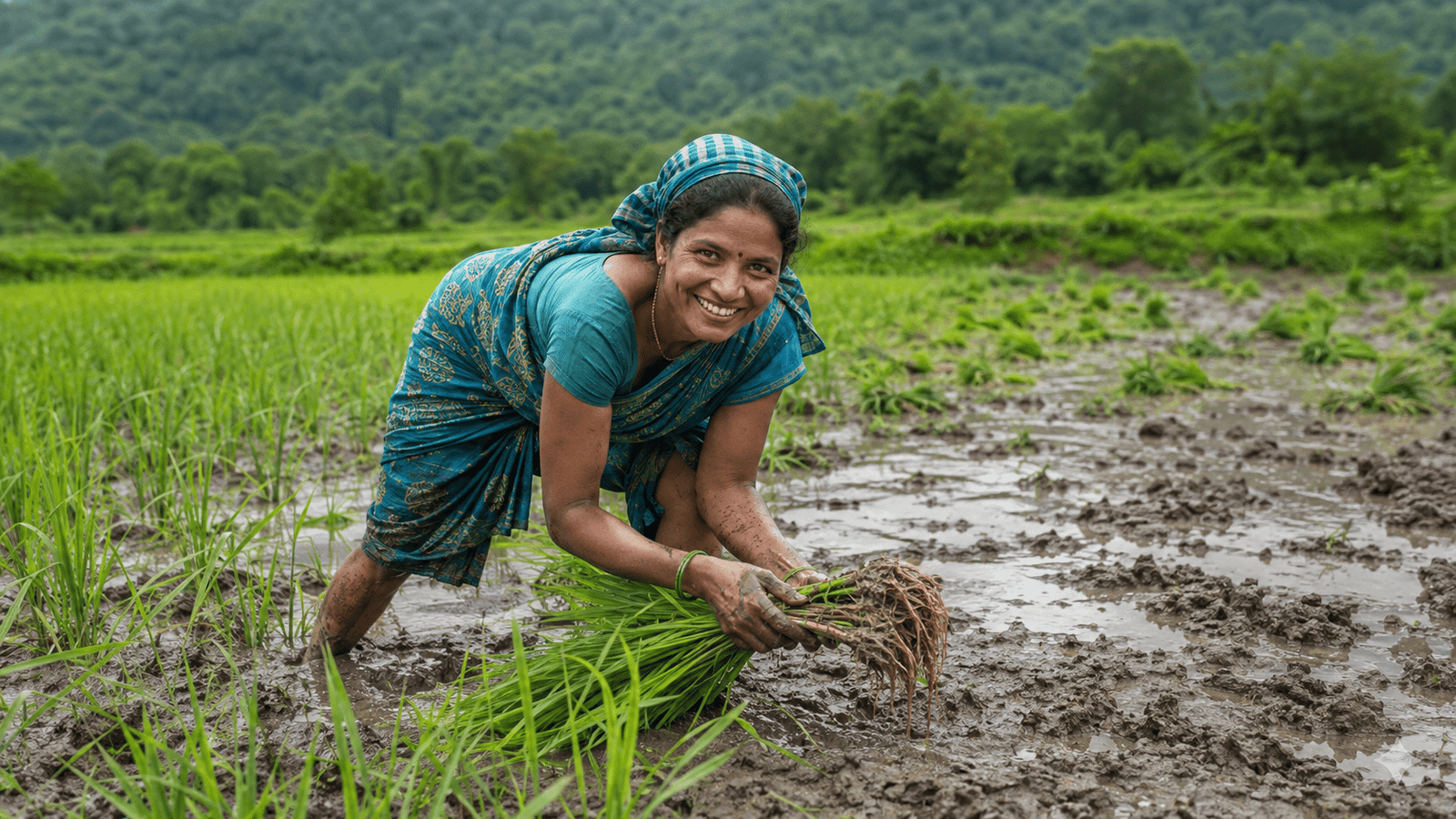
Water management increasingly sets organic long grain brown rice apart from conventionally flooded rice. Many certified organic paddies now use alternate wetting and drying (AWD) or the System of Rice Intensification (SRI) in place of continuous flooding, which cuts total water use, lowers methane emissions from waterlogged soil, and tends to reduce arsenic uptake compared with permanently flooded fields.
The color and nutrient content of the final grain are decided at the mill, not the farm. After harvest, the paddy is dried to roughly 12–14 percent moisture and passed through a huller that removes only the outer husk. Unlike white rice, which continues on to a whitening and polishing stage that strips away the bran and germ, brown rice production stops right after husking. That single missing step is the entire difference between an organic long grain white rice and an organic long grain brown rice grown from the exact same paddy. Long-grain lots are then graded for length uniformity and a low percentage of broken kernels, since broken grains cook unevenly and are typically diverted to a separate, lower-grade stream.
Because the bran layer still contains natural oils, organic long grain brown rice is more chemically active than milled white rice from the moment it leaves the huller. Reputable exporters account for this by packing bulk brown rice with minimal air headspace, and sometimes with nitrogen flushing, specifically to slow oxidation of those oils between milling and the point of sale — a packaging consideration that simply doesn’t apply to fully milled white rice.
4. Nutrition Profile of Organic Long Grain Brown Rice
A one-cup serving of cooked organic long grain brown rice (about 195 g) provides roughly 216 calories, 45 g of carbohydrate, 5 g of protein, 3.5 g of fiber and 1.8 g of fat — figures that are broadly similar across brown rice grain lengths, since the bran and germ layer, not the grain shape, is what drives the nutrient profile. Where long grain brown rice earns its place on a nutrition label is in the micronutrients concentrated in that retained bran layer.
Approximate values for one cooked cup (195 g) of organic long grain brown rice, based on published USDA food composition data.
Manganese, concentrated in the bran layer, is the standout — a single cup covers close to four-fifths of an adult’s daily requirement. Values are approximate and vary by growing conditions and lot.
Because organic certification does not change the botanical variety, macro-nutrient values are essentially identical between organic and conventionally grown long grain brown rice. What certification changes is the growing method behind those numbers: no synthetic pesticide residue, no synthetic fertilizer, and full chain-of-custody traceability back to a specific certified farm group.
Gluten-free status. Like all true rice, organic long grain brown rice is naturally gluten-free and safe for people with celiac disease or gluten sensitivity, provided the milling and packing facility follows documented gluten-free handling procedures to prevent cross-contamination on shared lines.
5. Glycemic Index & Health Benefits
The bran and germ layer that organic long grain brown rice retains slows down how quickly the starch inside is digested, which produces a gentler rise in blood sugar after a meal compared with milled white rice of the same variety. Published glycemic index (GI) studies typically place boiled long grain brown rice in the low-to-medium range.
Bands: green = low (0–55), gold = medium (55–70), red = high (70–100). Needle position marks a typical published GI value.
GI varies with variety, aging, cooking method and cooling. Pairing rice with protein, fat or fiber generally produces an even gentler blood-sugar response than rice eaten alone.
Beyond glycemic response, organic long grain brown rice offers a few other everyday health advantages worth noting for buyers positioning it to health-conscious shoppers: the fiber content supports digestive regularity and helps sustain a feeling of fullness after a meal; the retained germ provides small amounts of plant-based antioxidants and B vitamins that milling removes from white rice; and as a whole grain, it fits neatly into US dietary guidance that recommends making at least half of daily grain intake whole grains.
None of this makes organic long grain brown rice a treatment for any condition. Anyone managing diabetes, celiac disease or another health condition should talk with a healthcare provider or registered dietitian about how it fits their individual diet, rather than relying on GI figures or general nutrition claims alone.
6. Organic Long Grain Brown Rice vs White Rice & Other Aromatic Varieties
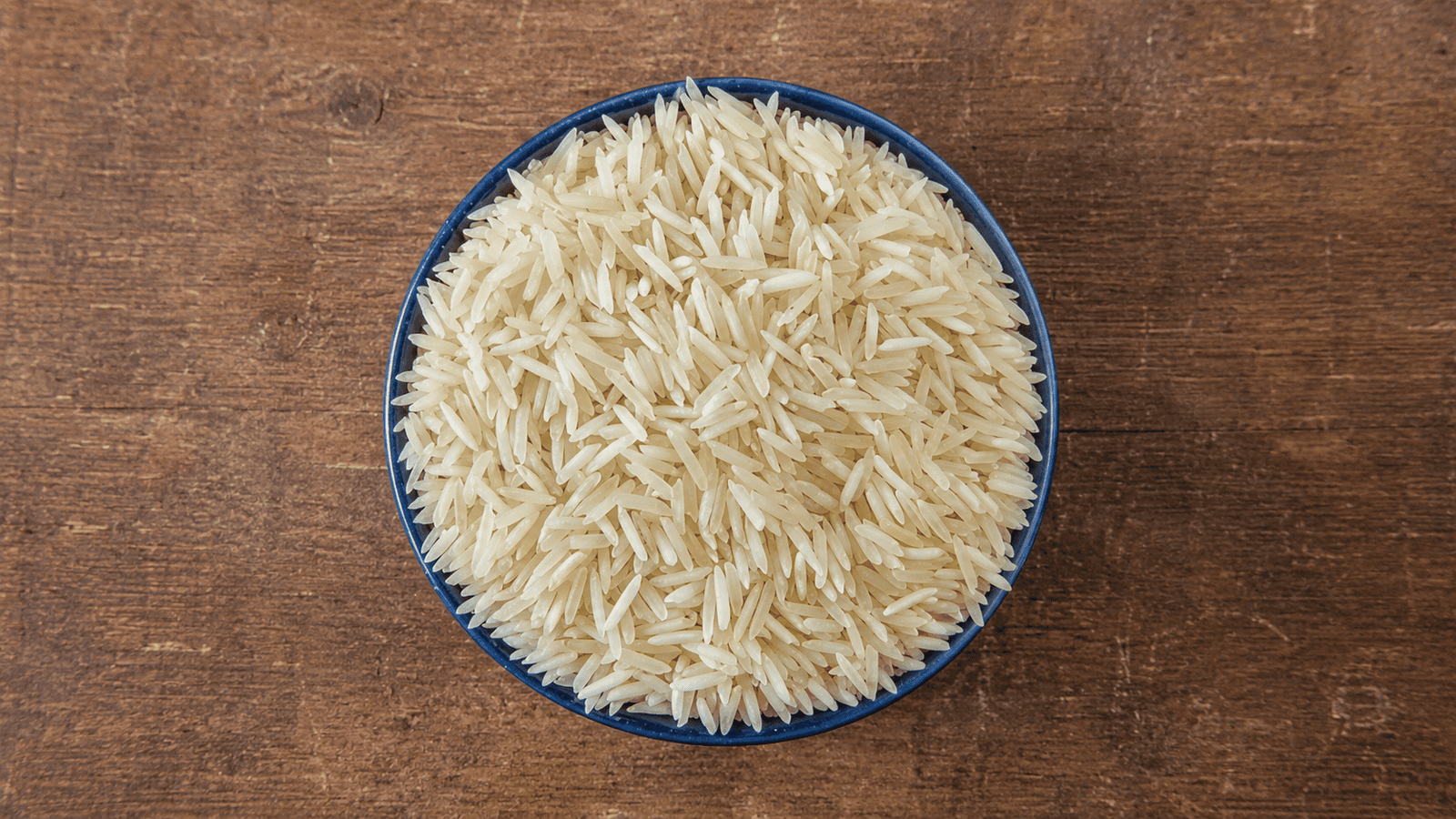
Buyers who already stock organic white rice often want to know exactly what switching a SKU to organic long grain brown rice changes, beyond color. The table below lines up the most common long-grain organic options side by side.
| Type | Milling | Fiber (per 100g raw) | Approx. GI | Cook Time |
|---|---|---|---|---|
| Organic Long Grain Brown Rice | Husked only, bran & germ intact | ~3.5 g | ~50 (low–medium) | 35–40 min |
| Organic Long Grain White Rice | Fully milled | ~0.6 g | ~70 (high) | 15–18 min |
| Organic Basmati Brown Rice | Husked, aromatic long-grain variety | ~2.8 g | ~48–52 | 30–35 min |
| Organic Jasmine Brown Rice | Husked, aromatic long-grain variety | ~2.7 g | ~55–60 | 25–30 min |
All rice, organic or conventional, takes up naturally occurring arsenic from soil and irrigation water, and organic certification on its own does not change that chemistry. What can make a measurable difference is the growing method: paddies managed with alternate wetting and drying, more common on organic farms, tend to show somewhat lower arsenic accumulation than continuously flooded fields. Buyers who are especially arsenic-conscious should request third-party heavy-metals testing on a lot-by-lot basis regardless of organic status, since rinsing and cooking with excess water and draining also meaningfully reduce arsenic content in the finished dish.
7. USDA Organic Certification for Organic Long Grain Brown Rice
For a US-bound shipment, “organic” is a legally defined claim, not a marketing word. To be sold as organic in the United States, long grain brown rice must be produced and handled by operations certified under the USDA National Organic Program (NOP), or under a foreign organic standard the USDA formally recognizes as equivalent, such as India’s NPOP. Labeling rules under 7 CFR 205.300–205.307 govern whether a bag may carry the USDA organic seal and the “100% organic” or “organic” claim; a product with 70–95 percent organic content may only say “made with organic rice” and cannot use the seal.
A reputable exporter should be able to produce every item below on request, before the shipment sails.
Importers, distributors and private-label brands must retain this documentation for at least five years for USDA NOP compliance audits.
India’s National Programme for Organic Production (NPOP) is recognized by the USDA as equivalent for production and handling, so long grain brown rice grown and processed under NPOP-certified Indian operations can be marketed as organic in the United States without a separate, duplicate on-site USDA certification. Not every origin has this arrangement, however: organic rice from several Southeast Asian origins, for example, is typically certified directly by a USDA-accredited certifying agent operating in-country, since there is no blanket equivalency agreement in place there.
8. How to Cook Organic Long Grain Brown Rice
Because the bran layer slows water absorption, organic long grain brown rice needs both more water and more time than white rice of the same length. The standard stovetop ratio is 1 part rice to 2 parts water, simmered for 35 to 40 minutes, but the method you choose changes that timeline considerably.
Approximate active plus cooking time, from raw rice to ready-to-fluff, for each common method.
Soaking the raw grain for 30–60 minutes before cooking shortens stovetop and oven times by roughly 5–10 minutes and gives a more evenly hydrated grain.
Step-by-step: stovetop absorption method
- Rinse. Place the raw organic long grain brown rice in a fine-mesh strainer and rinse under cold water for about 30 seconds to wash away surface starch and dust.
- Soak (optional but recommended). Soak the rinsed rice in fresh water for 30 to 60 minutes. This shortens the cook time and gives a more evenly tender grain.
- Measure. Combine 1 part rice with 2 parts water in a heavy-bottomed pot, with a pinch of salt and a small amount of oil or butter if desired.
- Boil, then simmer. Bring to a full boil uncovered, reduce the heat to the lowest setting, cover tightly, and simmer undisturbed for 35 to 40 minutes.
- Rest. Remove from the heat and let the covered pot stand for 10 minutes so the remaining moisture redistributes evenly.
- Fluff. Uncover and fluff gently with a fork to separate the grains before serving.
9. Culinary Uses & Serving Ideas
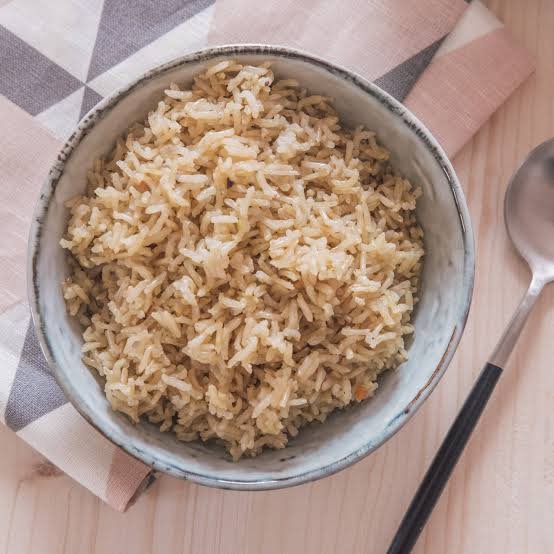
Long grain organic brown rice earns its place as a menu and retail staple because it performs consistently across a wide range of formats. For US foodservice and retail buyers building out a SKU or menu item, the most common applications are worth knowing:
- Grain bowls and meal-prep containers — the separate-grain texture holds up over several days of refrigeration without turning gummy, which is why it is the default base for most bowl-format menu items.
- Pilaf and side-dish applications — sautéed briefly in oil before the liquid is added, then simmered, for a fragrant, restaurant-style side.
- Whole-grain fried rice — day-old, fully cooled organic long grain brown rice fries up drier and less sticky than white rice, giving a better texture for stir-fried applications.
- Stuffed vegetables and casseroles — the firmer bite holds its shape well as a filling for peppers, squash or cabbage rolls.
- Grain salads — served warm or cold with vegetables, herbs and a vinaigrette, taking advantage of the rice's ability to absorb dressing without becoming mushy.
- Breakfast porridge and grain cereal blends — simmered longer with extra liquid and combined with fruit, nuts or a sweetener for a whole-grain breakfast format.
Because it is naturally gluten-free, organic long grain brown rice also functions as a straightforward base ingredient for gluten-free product lines, provided the supplier can document dedicated or verified gluten-free handling on the milling and packing line.
10. Importing Organic Long Grain Brown Rice to the United States
Bringing organic long grain brown rice into the United States involves coordinated compliance across several federal agencies. Understanding the process up front helps importers, distributors and private-label brands avoid costly port holds and certification gaps.
FDA Prior Notice
Under the Bioterrorism Act, prior notice must be filed electronically through FDA’s Prior Notice System Interface (PNSI) or via ABI/ACE before the shipment arrives at a US port, generally no earlier than 30 days and no later than the time the shipment is en route. Organic long grain brown rice typically falls under FDA Product Code 34 — Cereal Preparations / Rice.
USDA Organic Compliance
Shipments must be accompanied by an NOP transaction certificate issued by an accredited certifier. The importer, or the first US recipient handling the product, generally also needs to be certified organic under NOP, or to operate under a certified organic system plan documenting handling, storage and segregation. Private-label brands placing the USDA organic seal on retail packaging must be certified themselves.
Phytosanitary Certificate
A government-issued phytosanitary certificate from the exporting country’s plant protection organization confirms the rice is free from quarantined pests. The original accompanies the shipment, and US Customs and Border Protection (CBP) together with USDA APHIS review it at the port of entry.
HS Code & Duties
Because it stops at husking, organic long grain brown rice is most commonly classified under Harmonized System code 1006.20 (husked, or brown, rice). Related codes cover other processing stages: 1006.10 (paddy rice, still in the husk), 1006.30 (semi-milled or wholly milled rice) and 1006.40 (broken rice). Most-favored-nation duty rates vary by code and origin, so importers should confirm current rates with a licensed customs broker before finalizing a purchase order.
Port of Entry & Customs Clearance
Major US entry points for rice shipments include the Port of New York/New Jersey, Los Angeles/Long Beach, Houston, Savannah and Oakland. A formal CBP entry is filed via ACE (Automated Commercial Environment) with the commercial invoice, packing list, bill of lading, phytosanitary certificate, organic transaction certificate and FDA prior notice confirmation. Sampling may occur for pesticide or microbiological screening, and because brown rice's bran oils are more sensitive to heat and humidity than white rice, humidity-controlled drayage from port to warehouse is particularly worth confirming with your logistics provider.
11. Bulk Sourcing & Packaging for Organic Long Grain Brown Rice
US buyers of organic long grain brown rice typically source in volumes ranging from a single pallet to multiple container-loads per month. Standard export packaging reflects that full range of demand, from retail pouches to industrial bulk bags.
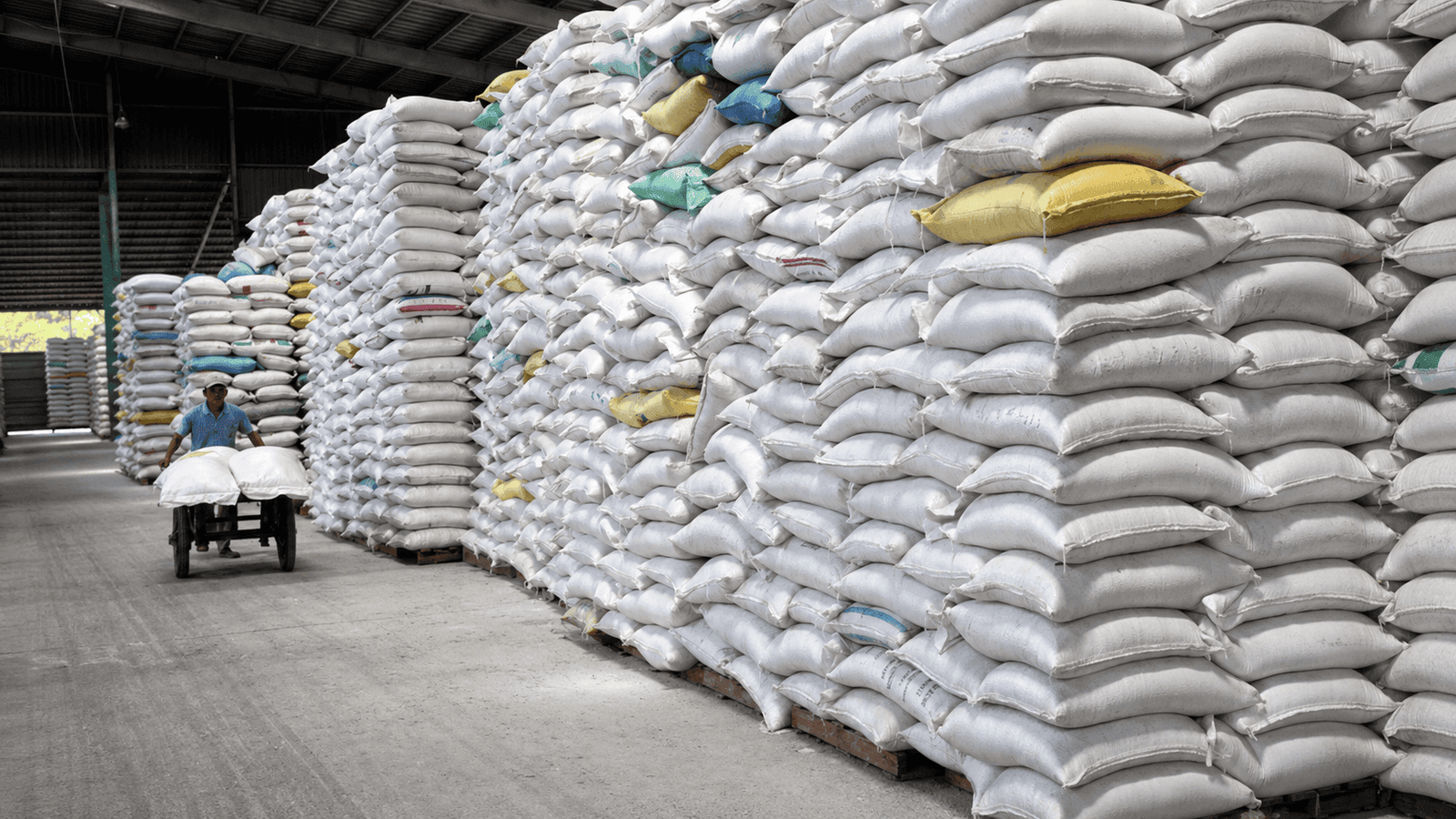
All formats use food-grade, FDA-compliant materials suited to preserving bran-layer freshness.
A standard 20-ft FCL carries approximately 18–22 MT of bagged organic long grain brown rice; a 40-ft FCL typically carries 25–28 MT depending on stowage and bag size.
Minimum order quantities. Wholesale MOQ for certified organic long grain brown rice typically starts around 1 metric ton, with better per-unit efficiency reached above roughly 18 metric tons for a 20-ft container. Private-label retail packaging usually requires a higher minimum, often in the 5–10 metric ton range, due to printing-plate and packaging-film setup costs.
Lead times. From a confirmed purchase order to vessel sailing, typical lead time runs 4–6 weeks for stock inventory and 8–10 weeks for private-label production, including milling, packaging and export documentation. Sea transit to US East Coast ports generally averages 25–35 days from South Asian origins.
12. Frequently Asked Questions
Common questions from US buyers, distributors and retail brands evaluating organic long grain brown rice for their sourcing pipeline.
Organic long grain brown rice is whole-grain rice with a length-to-width ratio of roughly 3:1 or greater, milled only enough to remove the outer husk so the bran and germ layers stay intact, and grown and processed under USDA National Organic Program standards or a recognized equivalent such as India's NPOP. The organic label covers the farming and handling method, not the grain shape: certified organic seed, no synthetic pesticides or fertilizers, and a documented 36-month transition period on the growing land.
Not better, just different. Long grain brown rice has less amylopectin relative to its size, so the cooked grains stay light, separate and fluffy, which suits pilafs, grain bowls and fried rice. Medium and short grain brown rice release more starch as they cook, producing a stickier, more clingy texture that works well in risotto-style dishes, stuffed vegetables, sushi and rice pudding. The right choice depends on the dish, not on nutritional superiority.
The difference is milling, not the underlying grain. White rice is polished after husking to remove the bran and germ, while brown rice stops at husking and keeps both layers. That extra layer gives organic long grain brown rice roughly five to six times the fiber of white rice, a meaningfully lower glycemic index, and a nuttier flavor, but it also means a longer cook time and a shorter shelf life because the bran's natural oils can turn rancid over time.
Its fiber content slows digestion and produces a gentler post-meal blood sugar rise than milled white rice, and the added fiber can support a feeling of fullness as part of a balanced plate. That said, organic long grain brown rice is not a guaranteed weight-loss or blood-sugar solution on its own, and anyone managing diabetes or another metabolic condition should talk with a healthcare provider about how it fits their specific diet.
On the stovetop, a 1:2 rice-to-water ratio and roughly 35 to 40 minutes of covered simmering is standard. A pressure cooker or electric multi-cooker cuts that to about 20 to 22 minutes, while a rice cooker's dedicated brown rice setting typically runs about 45 minutes including its own soak cycle. Soaking the raw grain for 30 to 60 minutes before cooking shortens the stovetop time by roughly 5 to 10 minutes and gives a more evenly hydrated grain.
Because the bran layer still contains natural oils, organic long grain brown rice is more perishable than white rice and is best used within 6 to 12 months when stored in a cool, dry, airtight container away from light, or refrigerated or frozen for longer shelf life. Exporters typically pack bulk brown rice with minimal headspace, and sometimes nitrogen flushing, specifically to slow bran-oil oxidation between milling and the point of sale.
Yes. Organic long grain brown rice for US importers, distributors and private-label brands is available from 25 kg and 50 kg PP woven bags up to 1 MT FIBC jumbo bags and full 20-ft or 40-ft container loads. Wholesale minimum order quantity typically starts around 1 metric ton, with better per-unit efficiency above roughly 18 metric tons for a 20-ft container. Private-label retail packaging is also available, usually at a higher minimum due to film and print-plate setup. Request a bulk quote here.
Look for a valid USDA National Organic Program certificate, or for Indian-origin rice, an NPOP certificate recognized as equivalent under the US-India organic trade arrangement, covering the farm, the mill and the exporter. You should also request a shipment-specific NOP transaction certificate, a lot traceability report, FDA prior notice confirmation, and a government-issued phytosanitary certificate, and keep all of it on file for at least five years in case of a USDA compliance audit.
13. Conclusion
Organic long grain brown rice sits at the overlap of three things US buyers increasingly look for at once: a whole grain with real fiber and micronutrient content, a grain shape that behaves reliably in grain bowls, pilafs and meal-prep formats, and a legally defensible organic claim backed by full chain-of-custody documentation. Understanding how it's grown, milled, certified and stored is what separates a straightforward, compliant purchase order from one that gets held up at a US port over missing paperwork.
If your business is ready to source certified organic long grain brown rice, our export desk can provide full USDA NOP, NPOP and export documentation, samples and a tailored quote within one business day.
Ready to Source Organic Long Grain Brown Rice?
Get a tailored quotation with full USDA NOP, NPOP & export documentation. Our export desk responds to all US buyer inquiries within one business day.