1. What Is Organic White Long Grain Rice?
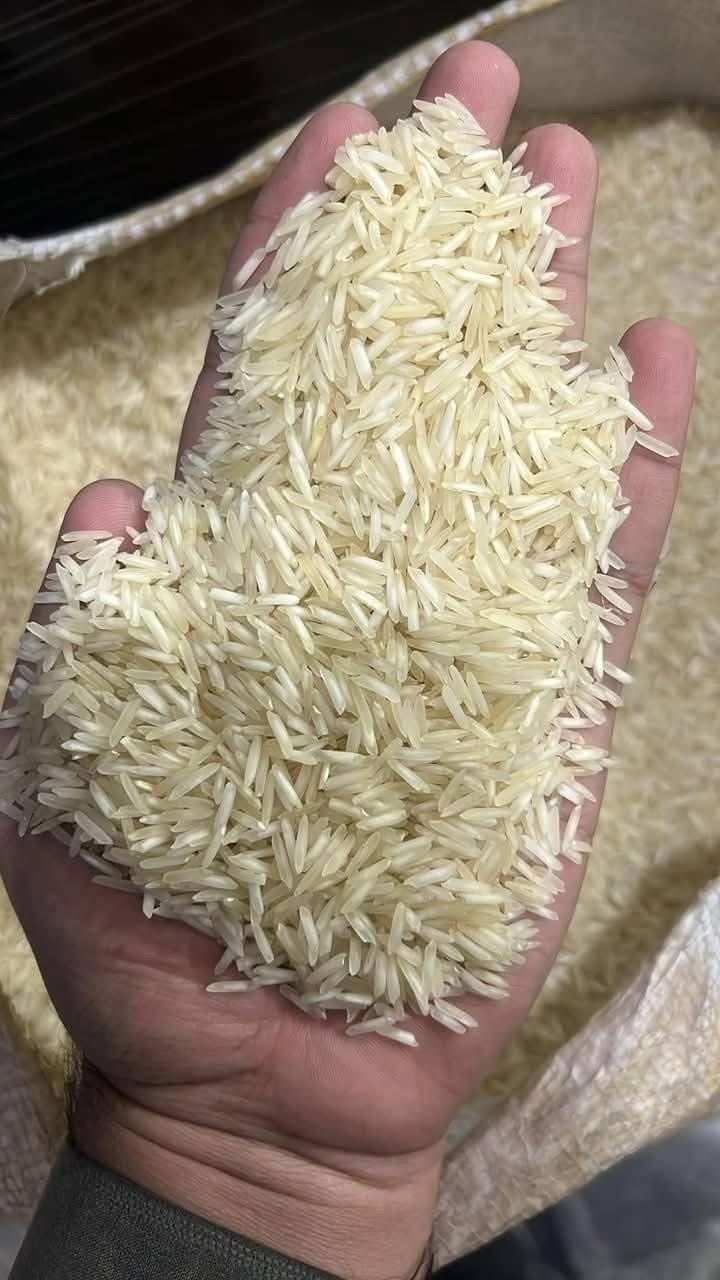
Organic white long grain rice is milled rice from the species Oryza sativa whose kernels are noticeably longer than they are wide, and which has been farmed without synthetic pesticides, herbicides or chemical fertilisers for a minimum of three years before harvest. Unlike basmati, which is a single, protected, aromatic variety group, “long grain” is a shape category that covers dozens of high-yield cultivars grown across South Asia, Southeast Asia and the Americas.
The “white” in the name refers to milling: after the inedible husk is removed, the bran layer and germ are polished away, leaving a smooth, ivory-white kernel that cooks quickly and stays separate on the plate. This makes organic white long grain rice the everyday workhorse of the rice aisle — less aromatic and typically less expensive to produce than basmati, but versatile enough for curries, stir-fries, jollof, pilau, salads and meal-prep bowls alike.
For a UK shopper or foodservice buyer, “organic” carries a specific legal meaning rather than being a marketing flourish. To be sold as organic in Great Britain, the rice must be grown and handled by operations certified under an approved organic control body, with every stage from paddy field to packing shed documented and independently audited. We'll unpack exactly what that means, and what to check for, later in this guide.
2. Long Grain Rice Classification: What Actually Makes a Grain “Long”?
“Long grain” is not a marketing term — it is a defined shape category used by customs authorities, food scientists and plant breeders alike, based on two measurements: kernel length and the length-to-width (L/W) ratio. The classification used in UK and EU rice tariff rules splits milled rice into three shape bands.
- Round (short) grain: length of 5.2 mm or less, with an L/W ratio below 2. Almost round, and the grains cling together when cooked — the classic pudding-rice profile.
- Medium grain: length over 5.2 mm but not exceeding 6.0 mm, with an L/W ratio below 3. Plumper and softer, suited to risotto and paella-style dishes.
- Long grain: length exceeding 6.0 mm. Within this band, the most slender grains — with an L/W ratio of 3:1 or higher — sit in the “long grain” category that gives the fluffy, separate texture this guide is about.
The international Codex Alimentarius food standard applies a similar but stricter length threshold, setting long grain rice at a kernel length of 6.6 mm or more, while the International Rice Research Institute's varietal scale further splits long grain (6.61–7.5 mm) from extra-long grain (over 7.51 mm). In practical terms, our Organic White Long Grain Rice typically measures 6.2–7.0 mm with an L/W ratio around 3.0–3.5, comfortably meeting the long-grain definition under both frameworks.
Grain silhouettes drawn to relative proportion — the higher the ratio, the more slender the grain.
Ratios are typical values for milled rice. Aromatic long grain varieties such as basmati elongate further still once cooked, which is a varietal trait rather than a shape-classification requirement.
Why does this matter to a buyer? Because grain shape determines cooking behaviour, the correct customs commodity code, and reasonable buyer expectations. A rice sold as “long grain” that fails to meet the length and ratio thresholds above is either mislabelled or has been bulked out with shorter, broken kernels — both worth checking for in a certificate of analysis before you commit to a container.
3. Where Organic White Long Grain Rice Is Grown & Leading Varieties
India is one of the world's largest producers and exporters of long grain rice, and organic cultivation is concentrated across its major paddy belts: Punjab and Haryana in the north, West Bengal, Odisha and Chhattisgarh in the east, and Andhra Pradesh and Telangana in the south. Each region contributes its own high-yield, non-aromatic varieties — IR-64, PR-106, MTU-1010 and Swarna among the most widely grown — selected for their sturdy plant type, disease resistance and consistent grain length rather than fragrance.
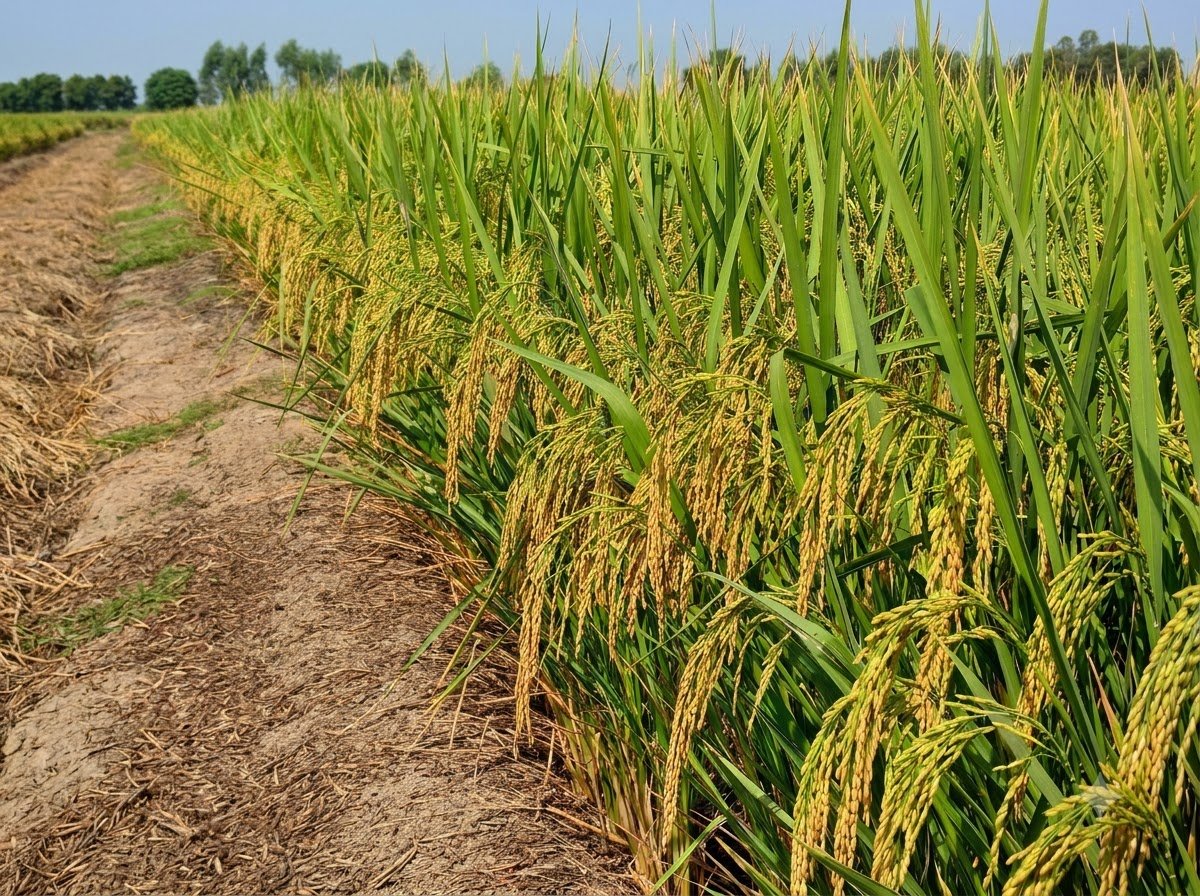
Organic certification adds a further layer of discipline on top of ordinary good agricultural practice. Farms must show at least 36 months free of prohibited inputs before their first certified harvest, maintain buffer strips from any conventional neighbouring field, and record every application of compost, biofertiliser or neem-based pest control in a traceable farm diary. Weed and pest management leans on crop rotation with pulses, manual and mechanical weeding, and biological controls rather than synthetic sprays.
After harvest, paddy is dried to around 12–13% moisture, stored separately from conventional stock, and milled in a dedicated or thoroughly cleaned organic production run before packing. Some organic long grain rice is also parboiled — steamed and dried before milling — a process especially popular with UK buyers serving Caribbean and West African communities, since parboiling firms up the grain, reduces stickiness and suits dishes such as jollof rice.
4. Nutritional Profile of Organic White Long Grain Rice
A 100 g serving of cooked organic white long grain rice provides roughly 125–135 kcal, made up almost entirely of carbohydrate, with modest protein and only trace fat and fibre. Because the bran and germ are removed during milling, white long grain rice carries less fibre and fewer micronutrients than brown rice, but it is correspondingly gentler on the digestive system and cooks in around 15–18 minutes rather than 35–45.
Share of total macronutrient weight, organic white long grain rice, boiled and drained.
Typical values, USDA FoodData Central and Indian food composition references. Organic white long grain rice also supplies small amounts of manganese, magnesium, selenium and B vitamins (thiamin, niacin, B6).
Because rice is not routinely fortified in the UK the way it is in some other markets, the mineral content of organic white long grain rice depends largely on soil health — another reason buyers increasingly ask for the compost, biofertiliser and crop-rotation records that sit behind organic certification, rather than taking the label at face value.
5. Organic White Long Grain vs Basmati, Jasmine, Brown & Parboiled Rice
UK shelves stock several long-grain-shaped rices side by side, and buyers often ask how organic white long grain compares. The short answer: they share a similar kernel shape but differ sharply in aroma, texture and the dish they are built for.
| Variety | Grain Length (raw) | Aroma | Texture (cooked) | Best UK Use |
|---|---|---|---|---|
| Organic White Long Grain | 6.2–7.0 mm | Mild, neutral | Light, separate, fluffy | Everyday meals, curries, stir-fries, meal prep |
| Organic Basmati | 7.0–8.4 mm | Nutty, aromatic | Fluffy, highly elongated | Biryani, pilau, special occasions |
| Jasmine | 6.5–7.0 mm | Floral, sweet | Soft, slightly sticky | Thai, Vietnamese, curry |
| Organic Brown Long Grain | 6.2–7.0 mm | Earthy, nutty | Chewy, hearty | Health bowls, salads, meal prep |
| Parboiled Long Grain | 6.0–6.8 mm | Mild, slightly nutty | Firm, very separate | Jollof, buffet & foodservice catering |
Organic white long grain rice sits deliberately in the middle: less fragrant than basmati or jasmine, but more neutral-tasting and typically faster-cooking, which makes it a natural fit for private-label everyday rice, foodservice packs and recipes where the rice is a backdrop rather than the star. Brown long grain trades texture and speed for extra fibre, while parboiled long grain is the preferred choice across much of the UK's Caribbean and West African food sector for its firm, non-sticky bite.
6. UK Organic Certification: What It Means for UK Buyers
In Great Britain, “organic” is a legally controlled term, not a self-declared claim. Businesses cannot certify themselves as organic directly with the government — instead, growers, processors, importers and packers must be certified by one of the UK's approved organic control bodies, who audit against the retained organic production and labelling rules and issue a licence that is renewed annually.
The UK's approved control bodies currently include Soil Association Certification Ltd, Organic Farmers & Growers CIC, the Organic Food Federation, OF&G (Scotland) Ltd, Quality Welsh Food Certification Ltd and the Biodynamic Association Certification. For an overseas exporter such as an Indian rice mill, the relevant question is different: their own certifier — typically an internationally accredited body such as Control Union, Ecocert, OneCert or Lacon — needs to appear on the UK's list of approved non-UK control bodies for the country of export, so that the paperwork it issues will be accepted at a UK port.
For every shipment, UK buyers should request and check:
- Valid organic certificates covering the producer group, the mill and the exporter, showing an unbroken chain of custody
- A GB Certificate of Inspection (COI) specific to that consignment, endorsed by the exporter's control body before the goods leave origin
- A lot traceability report linking the shipment back to the certified organic farm group
- The correct control-body reference that must appear on any retail packaging carrying an organic claim or symbol
These records typically need to be kept on file for two years and made available if a Port Health Authority or Trading Standards audit is carried out. We cover exactly how the COI moves through the import process in Section 9.
7. Health Benefits of Organic White Long Grain Rice
The health conversation around organic white long grain rice usually comes down to four questions: how it affects blood sugar, whether it's gentle to digest, whether it's genuinely gluten-free, and how it compares on pesticide residues.
Glycemic response. Milled white long grain rice sits in the medium-to-high glycemic index (GI) band, typically 60–72 when boiled and drained — higher than aged basmati or brown rice, but usually lower than jasmine. Interestingly, parboiled rice of the same grain shape tends to score notably lower, because the steaming step partially gelatinises and then retrogrades the starch, which slows digestion.
Bars show the published low-to-high range for each rice type. Low GI ≤55, Medium 56–69, High ≥70.
GI values vary with cooking method, cooling and the individual, and are published typical ranges rather than fixed figures. Pairing rice with protein, fat or fibre-rich sides moderates the overall meal response.
Gluten-free status. All true rice, including organic white long grain rice, is naturally free of gluten, making it suitable for people with coeliac disease or wheat sensitivity, provided the mill and packer maintain documented gluten-free handling to prevent cross-contamination with wheat, barley or rye.
Digestibility. With little insoluble fibre and virtually no phytic acid compared with wholegrain alternatives, milled white rice is one of the gentlest starches on the digestive system, which is why it appears so often in bland-diet and recovery meal plans.
Residue safety. Because organic white long grain rice is grown without synthetic pesticides for at least three years and processed in segregated facilities, it consistently tests with a lower frequency of pesticide-residue detections than conventionally farmed rice. UK buyers should still ask for a recent third-party pesticide and heavy-metals panel for each lot, since “organic” addresses farming inputs, not naturally occurring soil contaminants such as arsenic, which all rice absorbs to some degree.
8. How to Cook Perfect Organic White Long Grain Rice
Organic white long grain rice doesn't need the soaking that aged basmati benefits from, but getting the water ratio right still makes the difference between fluffy, separate grains and a stodgy pan. Three methods cover most kitchens.
Fill height shows rice (gold) versus water (green) as a share of total volume.
The absorption method gives the best texture and retains the most nutrients, since no cooking water is discarded.
Step-by-step: absorption method
- Rinse. Place one cup (about 190 g) of organic white long grain rice in a fine-mesh strainer and rinse under cold running water until it runs nearly clear. This washes off surface starch that otherwise makes the pan gluey.
- Measure water. Use a 1:1.75 ratio of rice to water for the stovetop absorption method (1 cup rice to 1¾ cups water). Stir in a pinch of salt and a teaspoon of oil, butter or ghee per cup of rice.
- Bring to the boil. Heat uncovered over medium-high heat until the water reaches a rolling boil.
- Simmer, covered. Reduce immediately to the lowest simmer, cover with a tight-fitting lid and cook undisturbed for 15–18 minutes. Keep the lid on — every peek lets steam escape and throws off the timing.
- Rest. Take the pan off the heat and leave it covered for 5–10 minutes so the last of the moisture redistributes evenly through the grains.
- Fluff. Run a fork gently through the rice to separate the grains before serving.
9. Importing Organic White Long Grain Rice into the UK
Bringing organic white long grain rice into Great Britain from a third country such as India involves several checks running in parallel: an organic-specific process, a general food-safety process, and standard customs clearance. Understanding how they fit together helps importers avoid a container sitting idle at the port.
GB Certificate of Inspection (COI)
Every organic consignment entering Great Britain from outside the EU, EEA and Switzerland needs a GB Certificate of Inspection. The exporter's approved control body issues and endorses the COI before the shipment leaves origin; the importer (listed on the certificate) must themselves be registered with a UK organic control body to receive it. The signed COI, together with commercial documents such as the invoice, packing list and bill of lading, is submitted to the relevant Port Health Authority for validation on arrival, and records are generally expected to be kept for two years.
Port Health Pre-Notification
UK Port Health Authorities require advance notice of an incoming organic consignment — typically at least six hours ahead for air freight and roll-on/roll-off traffic, and 24 hours for other transport modes. Once the paperwork checks out, the consignment is released for free circulation and the COI is endorsed.
High-Risk Food and Feed Checks
Separately from the organic process, some foods of non-animal origin — rice included, depending on the country of export and recent compliance history — can appear on the UK's High-Risk Food and Feed of Non-Animal Origin (HRFNAO) list, which triggers a Common Health Entry Document (CHED-D) and a set frequency of identity and physical checks at a Border Control Post. This list is reviewed and updated at least twice a year, so it's worth checking the current status for your country of origin before a shipment sails, rather than assuming last year's rules still apply.
Phytosanitary Certificate
A phytosanitary certificate from the exporting country's plant protection organisation — in India's case linked to APEDA and the national Plant Quarantine authorities — confirms the consignment is free from quarantined pests, and is checked alongside the other documents at the point of entry.
HS Code, Tariff & Customs Clearance
Rice is classified under Chapter 10 (Cereals), heading 1006, with milled rice falling under subheading 1006.30. The UK's tariff schedule further distinguishes round, medium and long grain within that subheading based on the same length and L/W ratio thresholds covered in Section 2, so declaring the correct grain shape matters for accurate classification. The importer (or their customs agent) needs an EORI number to clear goods through UK customs, and should confirm the current duty rate under the UK Global Tariff, or any preferential rate that may apply, using HMRC's trade tariff tool or a licensed customs broker. Major UK container ports handling food-grade cereal shipments include Felixstowe, Southampton, London Gateway, Tilbury and Liverpool; dry, humidity-controlled drayage from port to warehouse preserves grain quality even though cold storage isn't required.
10. Bulk Sourcing & Packaging Options for UK Buyers
UK buyers of organic white long grain rice source anywhere from a single pallet to multiple container-loads a month, and packaging is built around that ladder of demand.
Circle size illustrates relative pack weight, not to true mathematical scale.
A standard 20-ft FCL carries approximately 18–22 MT of bagged rice; a 40-ft FCL typically carries 25–28 MT, depending on stowage and bag size.
Retail & foodservice. 1 kg and 5 kg pouches suit UK grocery and small foodservice operators; 10 kg and 25 kg bags cover restaurants, institutional kitchens and smaller distributors. All retail packaging carrying an organic claim must use food-grade materials that have not themselves been treated with prohibited substances.
Wholesale. 25 kg and 50 kg PP woven bags remain the standard format for UK wholesalers and bulk buyers, typically palletised at 1.0–1.2 MT per pallet.
Industrial. 1 MT FIBC jumbo bags suit co-packers, re-packers and large institutional buyers who want fewer bags to handle and a lower pallet count.
Minimum order quantities. Wholesale MOQ for certified organic white long grain rice typically starts at 1 MT, with container-load efficiency reached at 18–22 MT for a 20-ft FCL or 25–28 MT for a 40-ft FCL of bagged rice. Private-label runs may carry a higher MOQ, often 5–10 MT, because of printing-plate and packaging-film minimums.
Lead times. From a confirmed purchase order to vessel departure, typical lead time is 4–6 weeks for stock inventory and 8–10 weeks for private-label runs once milling, packaging and export documentation are factored in. Sea transit from Indian origin ports to UK container ports generally runs 25–35 days.
11. Frequently Asked Questions
Common questions from UK buyers, distributors and retail brands evaluating organic white long grain rice for their sourcing pipeline.
Organic white long grain rice is milled rice with a kernel length of more than 6.0 mm and a length-to-width ratio of around 3:1 or higher, grown without synthetic pesticides or chemical fertilisers for at least three years. It includes varieties such as IR-64, PR-106 and Swarna, and is prized for its light, separate, fluffy texture once cooked.
Yes. It is a naturally gluten-free, easily digestible carbohydrate with a medium-to-high glycemic index of roughly 60–72 when boiled. Because it is grown without synthetic pesticides for at least three years, it typically shows lower pesticide-residue levels than conventionally farmed rice, making it a clean everyday staple.
All basmati is long grain, but not all long grain rice is basmati. Basmati is a protected, aromatic sub-variety that elongates further on cooking and carries a distinct nutty fragrance, while standard organic white long grain rice is a broader, non-aromatic category grown from high-yield varieties like IR-64 or PR-106, valued for its neutral flavour and everyday versatility.
Yes. Like all true rice, organic white long grain rice is naturally gluten-free and suitable for people with coeliac disease or gluten sensitivity, provided the milling and packing facility follows documented gluten-free handling procedures to prevent cross-contamination with gluten-containing grains.
Stored in a cool, dry, airtight container away from sunlight, organic white long grain rice keeps its best quality for around 24–36 months from the milling date. Its low moisture content (12–13%) and minimal oil content give it a notably longer shelf life than brown or parboiled rice.
Yes. We supply organic white long grain rice in 25 kg and 50 kg PP woven bags, 1 MT FIBC jumbo bags, and 20-ft or 40-ft FCL container loads, alongside private-label retail packaging in 1 kg and 5 kg formats for UK grocery and foodservice brands. Request a bulk quote here.
Every organic consignment entering Great Britain from a third country such as India needs a GB Certificate of Inspection issued and endorsed by the exporter's approved organic control body before departure, plus advance notice to the UK Port Health Authority at the port of entry. A phytosanitary certificate and the correct commodity code under HS heading 1006 are also required for customs clearance.
Organic white long grain rice is grown across India's major paddy belts, including Punjab, Haryana, West Bengal, Odisha, Chhattisgarh, Andhra Pradesh and Telangana, as well as parts of Pakistan, Thailand and the southern United States. India remains one of the world's largest producers and exporters of long grain rice.
12. Conclusion
Organic white long grain rice earns its place in the UK rice aisle through consistency rather than showmanship: a defined grain shape, a moderate glycemic profile, a naturally gluten-free carbohydrate base, and certification that stands up to a Port Health audit. For UK importers, wholesalers and private-label brands, the value proposition is a versatile, everyday long grain rice backed by verifiable organic paperwork from farm to container.
Understanding grain classification, UK organic certification and the GB import process puts buyers in a stronger position to source with confidence and avoid costly delays at the border. If your business is ready to source certified organic white long grain rice, our export desk can provide full documentation, samples and a tailored quote within one business day.
Ready to Source Organic White Long Grain Rice?
Get a tailored quotation with full organic certification, GB Certificate of Inspection support and export documentation. Our export desk responds to all UK buyer enquiries within one business day.