
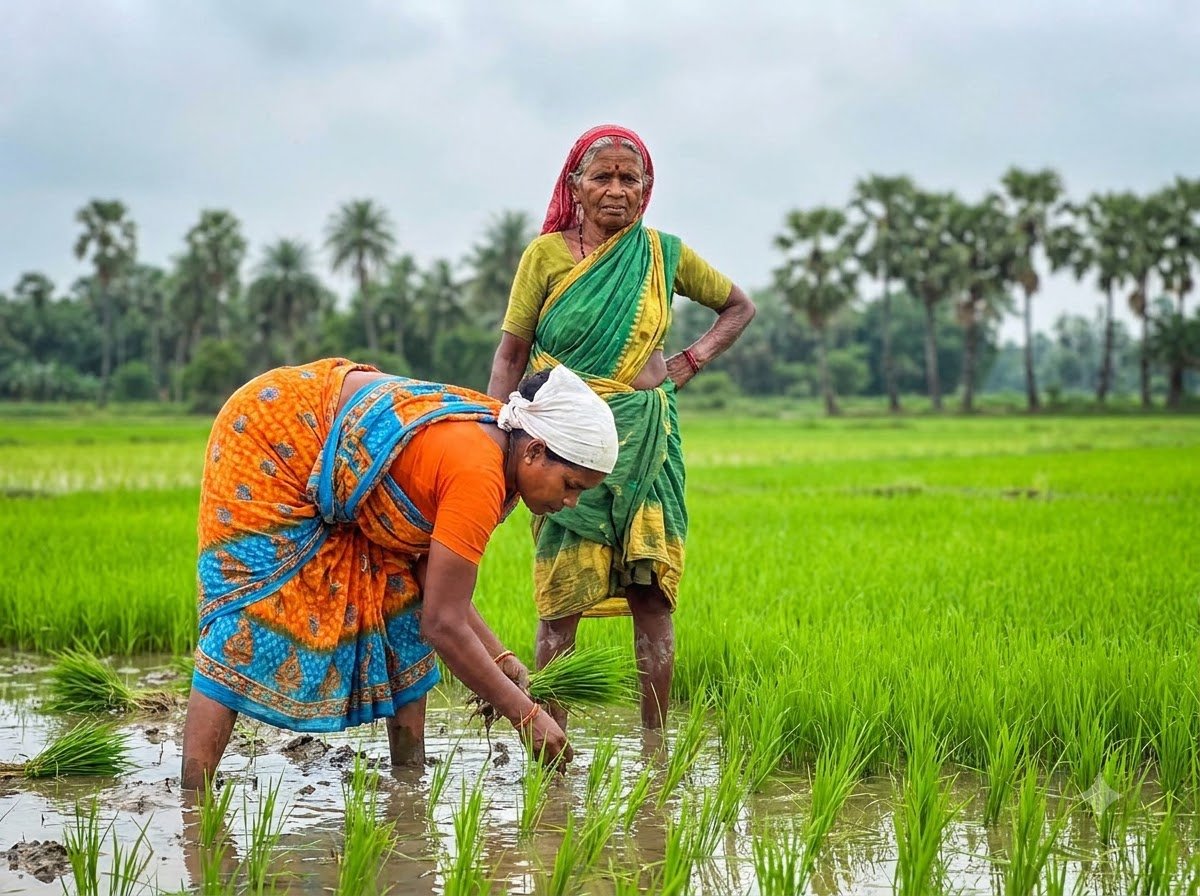
1. What Is Organic Bulk Rice?
Organic bulk rice is exactly what it sounds like: certified organic rice packed and sold in large-format quantities instead of small retail pouches. The certification behind it is identical to what you would find on a 1 kg grocery bag — the same USDA National Organic Program (NOP) recognition, or an NPOP-equivalent certificate for Indian-origin rice — but the format is built for buyers moving product by the pallet, the pallet-load, or the container rather than by the shelf-unit.
In practice, “organic bulk rice” covers a fairly wide range: 25 kg and 50 kg woven bags bought a pallet or two at a time by a regional distributor, 1 metric ton (MT) FIBC jumbo bags used by co-packers and mills, and full 20-ft or 40-ft container loads booked by importers and national accounts. What ties all of it together is that the buyer is planning around metric tons, pallets and container slots, not individual bags on a shelf.
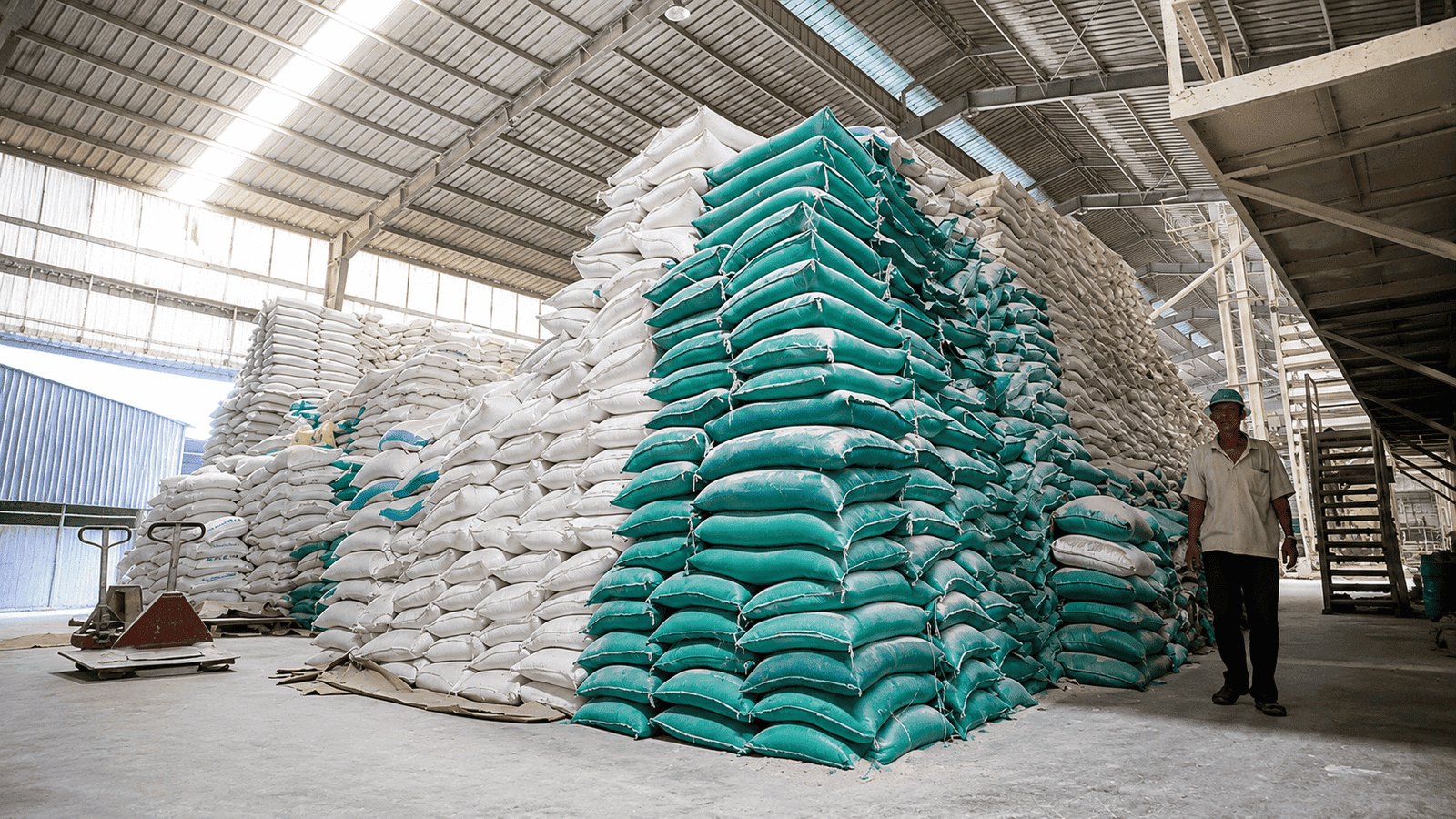
For a US business, buying organic rice in bulk usually means one of three things: a foodservice or institutional buyer needs a steady, cost-efficient supply for a kitchen or production line; a distributor needs inventory to break down and resell to smaller accounts; or a retail or CPG brand wants to build a private-label organic rice program without operating its own mill. Each of these buyers cares about slightly different things — packaging format, minimum order quantity, lead time, quality consistency — and this guide walks through all of them.
If you are still deciding which type of organic rice to carry — white, brown, basmati, black or red — our complete organic rice guide covers varieties, nutrition and cooking in depth. This guide assumes you already know roughly what you want to buy, and focuses entirely on how to buy it in bulk.
2. Why US Businesses Buy Organic Rice in Bulk
Buying organic rice in bulk is fundamentally a logistics and consistency decision. A handful of reasons come up again and again with US buyers.
Fewer touches, fewer packaging layers. A pallet of 50 kg bags or a single 1 MT jumbo bag moves the same amount of rice as dozens or hundreds of small retail units, with a fraction of the packaging material, labor and warehouse handling per metric ton. For high-volume kitchens, mills and co-packers, that adds up to meaningfully less packaging waste and fewer opportunities for damage in transit.
Supply consistency. Restaurants, institutional kitchens and manufacturers that build a recipe or a production run around a specific rice variety need that variety to show up the same way, shipment after shipment. Bulk contracts with a defined specification and a committed supplier are generally easier to keep consistent than sourcing the same volume through retail-size purchasing.
Private label and repack flexibility. Buying organic rice in bulk is the starting point for any private-label program: a distributor or brand can source certified bulk stock and repack it into its own bags, boxes or foodservice pouches, rather than negotiating a full farm-to-shelf supply chain from scratch.
Simpler inventory planning. One container-load purchase order, one arrival date, one lot number to track, is generally easier to plan around than dozens of smaller purchase orders spread across a quarter, particularly for finance and warehouse teams managing a broader SKU list.
3. Organic Bulk Rice Packaging Formats
“Bulk” is not a single package size — it is a ladder of formats that scales from a small business placing its first order to a national account booking multiple containers a quarter. Understanding where your order falls on that ladder makes it much easier to have a productive first conversation with a supplier.
The packaging ladder for organic rice, from single retail units to a fully loaded shipping container.
Most organic bulk rice buyers enter the ladder at the wholesale pallet or jumbo bag stage and move toward container loads as volume grows.
| Format | Typical Weight | Best For | Handling Notes |
|---|---|---|---|
| Retail Pouch | 1–5 kg | Grocery shelf, small foodservice | Consumer-ready printed packaging |
| Small Business Case | 10–25 kg | Restaurants, institutional kitchens | Palletized in mixed-SKU loads |
| Wholesale PP Bag | 25–50 kg | Distributors, co-packers | ~1–1.2 MT per pallet |
| Jumbo Bag (FIBC) | 1 MT (1,000 kg) | Large-volume buyers, mills, re-packers | Requires forklift or hoist handling |
| Container Load | 18–28 MT | Importers, national distributors | Mixed bag sizes per stowage plan |
All bulk packaging for organic rice must use new, food-grade materials suitable for direct food contact, and reputable exporters line woven and jumbo bags with a food-grade inner liner to limit moisture pickup during ocean transit. Ask specifically whether the bags you are quoted are new or reconditioned; reconditioned bags are not acceptable for a certified organic food product.
4. Container Loads & Shipping Capacity
Once an order grows past a handful of pallets, the natural next step is a full container load (FCL). How much organic bulk rice actually fits depends on the bag format, since 25 kg and 50 kg bags stack far more efficiently than 1 MT jumbo bags, which leave more unused space around their rounded shoulders.
Metric tons of bagged organic rice per container, by packaging format.
Figures are typical planning estimates; exact capacity depends on palletization, moisture content and the stowage plan your freight forwarder uses.
As a rule of thumb, a 20-ft container is the efficient starting point for a single-variety organic bulk rice order, while a 40-ft container makes more sense once you are consistently ordering 24 MT or more, or want to combine two or three varieties in one shipment. Dry milled rice does not require refrigerated containers, but humidity-controlled drayage from the port to your warehouse helps protect quality, especially in summer months.
5. Minimum Order Quantities by Buyer Type
Minimum order quantity (MOQ) is one of the first questions any organic bulk rice supplier will ask, and it scales fairly predictably with the type of buyer placing the order.
Order volume generally increases, and flexibility narrows, as a relationship moves from sample to standing program.
Ranges are typical industry patterns for certified organic bulk rice and will vary by supplier, variety and packaging format.
Two things move MOQ more than anything else: packaging and customization. Stock-packed 25 kg or 50 kg bags in a supplier’s standard printed design carry the lowest MOQ, because there is no setup cost involved. Private-label packaging, custom bag sizes, or a specific print run raise the minimum, since the supplier needs to justify the film, plate and changeover costs of a dedicated production run. If you are new to organic bulk rice sourcing, starting with a stock-packaging trial order before committing to private label is usually the lower-friction path.
6. Quality Specifications for Bulk Shipments
A bulk purchase order should always be backed by a written specification, not a general description like “good quality organic rice.” The specification is what your supplier is contractually held to, and it is what you check the shipment against on arrival.
Illustrative typical values against a commonly used maximum limit. Always confirm the exact specification with your supplier in writing.
Beyond these physical grading parameters, insist on lot-specific pesticide-residue and aflatoxin test results before the shipment sails, not just a general organic certificate.
Ask for a certificate of analysis (COA) issued against the agreed specification for every lot, not just a general product data sheet. For basmati specifically, also request average grain length and elongation-after-cooking figures, since these are what separate premium basmati from a generic long-grain aromatic rice. Keep a copy of every COA alongside your organic transaction certificates; if a quality dispute ever comes up, the paired documentation is what protects both sides.
7. Top Sourcing Regions for Organic Bulk Rice
Organic bulk rice reaching the US comes from a fairly concentrated set of origins, each with its own strengths.
Illustrative relative sourcing index for the US market, not official trade statistics.
India’s scale in certified organic paddy area and its NPOP–NOP equivalency arrangement make it the most common single origin for US organic bulk rice programs.
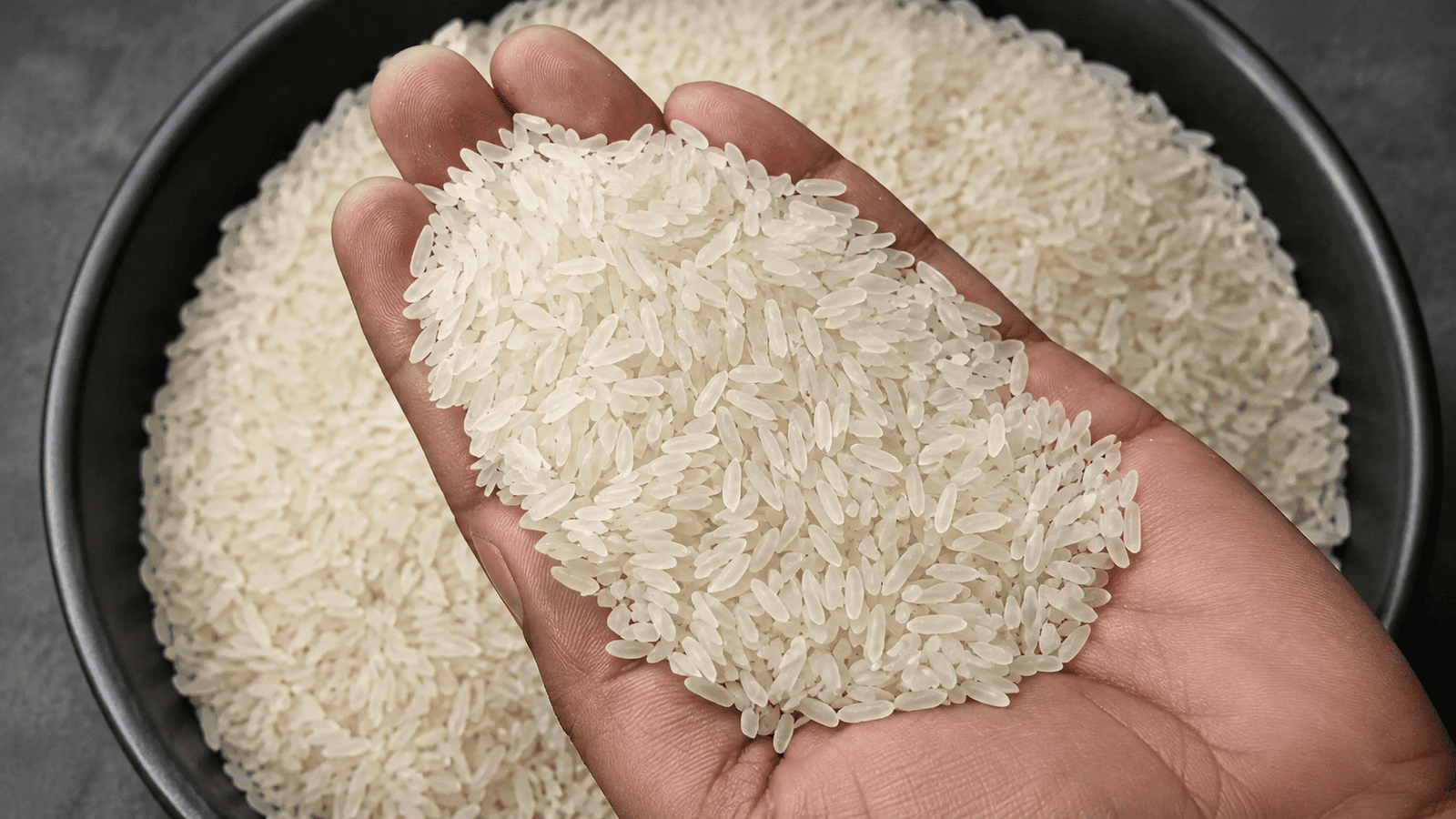
Origin matters for more than geography. It determines which certification pathway applies (NOP-direct versus an NPOP-equivalent arrangement), which export documentation your freight forwarder will need to handle, and, often, which varieties are realistically available in true bulk volume. A supplier who works across multiple origins can also give you a fallback if one region faces a weather-driven shortfall in a given season.
8. Certification & Import Documentation for Bulk Shipments
A bulk shipment does not need different certification standards than a retail-size shipment, but it does need a tighter documentation trail, because a single container represents a much larger financial and compliance exposure if paperwork is incomplete. Before confirming a purchase order, request:
- A valid USDA NOP or NPOP-equivalent organic certificate covering the farm group, the mill and the exporter
- A lot-specific NOP transaction certificate issued for that exact shipment
- A phytosanitary certificate from the exporting country’s plant protection authority
- Confirmation that FDA prior notice will be filed before the shipment reaches a US port, typically under FDA Product Code 34 (cereal preparations / rice)
- The correct HS code for your product — 1006.20 for brown rice, 1006.30 for milled rice, or 1006.40 for broken rice — so duties and entry paperwork match the actual goods
If you are the first US recipient handling the organic product, you will generally need your own organic handling certification or a documented organic system plan, even if you are not milling or repacking anything yourself. For the full step-by-step import walkthrough, including ports of entry and customs clearance, see the import section of our complete organic rice guide.
9. Storage, Handling & Shelf Life in Bulk
Bulk quantities change how rice needs to be stored. A single damaged pallet or a humidity spike in one corner of a warehouse can affect a meaningfully larger share of your inventory than it would with retail-size units, so storage discipline matters more, not less, once you are buying by the ton.
Range shown in months, assuming properly sealed, food-grade packaging and pest-controlled storage.
Brown, red and black organic rice contain natural bran oils and generally sit toward the shorter end of each range compared with milled white rice.
A few practical habits protect bulk inventory: keep all pallets off the floor and away from exterior walls, maintain a first-in-first-out (FIFO) rotation by lot number, and monitor warehouse conditions with a simple temperature and humidity log rather than assuming a facility is stable year-round. If you are holding jumbo bags for more than a few months, inspect a sample bag periodically for signs of moisture migration or pest activity rather than waiting until the bag is opened for use.
10. Private Label & Contract Packing of Organic Bulk Rice
Many organic bulk rice buyers eventually want their own branded package on the shelf rather than a generic bulk bag in the back of a warehouse. This is where contract packing, sometimes called repacking or co-packing, comes in: a certified facility fills your branded bags, pouches or foodservice cases from bulk stock.
A few things matter more for private label than for stock bulk purchases. First, the repacking facility itself must hold organic handling certification and operate under a documented organic system plan — buying certified bulk rice and repacking it in an uncertified facility breaks the chain of custody and voids the organic claim on the finished package. Second, expect a higher minimum order than a stock bulk purchase, since a private-label run typically requires a dedicated print plate or film order and a changeover on the packing line. Third, build in extra lead time for the first run: artwork approval, food-grade film sourcing and label compliance review (nutrition panel, USDA organic seal placement, allergen statements) all take time before the first bag rolls off the line.
Once a private-label program is running, reordering is usually far faster than the first setup, since the artwork, specification and packaging film are already approved and on file with the co-packer.
11. Choosing a Reliable Organic Bulk Rice Supplier
Not every supplier that lists “organic bulk rice” on a website is set up to serve a US container-load buyer well. A short due-diligence checklist goes a long way before you commit to a purchase order.
Finally, ask how the supplier handles a quality issue after arrival. A supplier confident in its own process will have a clear, pre-agreed procedure for lot disputes, rather than treating it as a negotiation that starts from zero every time.
12. Frequently Asked Questions
Common questions from US importers, distributors and private-label brands evaluating organic bulk rice for their sourcing pipeline.
Organic bulk rice is organically certified rice sold in large-format packaging, typically 25 kg or 50 kg bags, 1 metric ton FIBC jumbo bags, or full container loads, rather than small retail pouches. It carries the same USDA National Organic Program or NPOP-equivalent certification as retail organic rice, but is packed for importers, distributors, foodservice operators and private-label brands buying by the pallet or container rather than by the bag.
Minimum order quantity varies by supplier and packaging format. Many exporters set an entry-level minimum around 1 metric ton for standard 25 kg or 50 kg bagged organic rice, while a full container load typically starts around 18 metric tons for a 20-ft container. Private-label bulk orders that require custom bags or print plates usually carry a higher minimum than stock-packed bulk rice.
Organic bulk rice ships in food-grade PP woven bags at 25 kg or 50 kg, or in 1 metric ton FIBC jumbo bags, also called bulk bags or supersacks, for larger volumes. All packaging must be new, unused and suitable for direct food contact, and bags are typically fitted with an inner food-grade liner to protect against moisture during ocean transit.
A 20-ft container generally holds approximately 18-22 metric tons of bagged organic rice, while a 40-ft container typically carries 24-28 metric tons, depending on bag size, palletization and stowage method. Jumbo FIBC bags load differently than palletized 25 kg or 50 kg bags because of their shape, which can shift usable container weight by a ton or two in either direction.
Ask for a certificate of analysis covering moisture content, percentage of broken grains, foreign matter, damaged or discolored grains, and for basmati, average grain length. Reputable exporters test each export lot for pesticide residue and aflatoxin as part of their organic and food-safety compliance, and should share third-party lab results alongside the shipment's organic transaction certificate.
India is the largest source of certified organic bulk rice reaching the US market, covering both basmati and non-basmati varieties, followed by Thailand for organic jasmine and white rice. Italy supplies organic risotto and long-grain rice to specialty buyers, Pakistan exports organic basmati in bulk, and a smaller volume of domestic organic rice is grown in California and parts of the southern United States.
Yes, provided the repacking facility is itself certified under the USDA National Organic Program or an equivalent standard and follows a documented organic handling plan. Many bulk rice suppliers offer contract packing services that fill bulk stock into branded retail pouches or bags, though private-label repack runs usually require a higher minimum order than buying stock bulk packaging.
Store bulk organic rice off the floor on pallets, in a cool, dry, pest-controlled warehouse below roughly 20°C (68°F) and 60% relative humidity, away from direct sunlight and strong-smelling goods. FIBC jumbo bags are best rotated and used within 6-12 months of milling, while properly sealed 25 kg or 50 kg bags of white rice can hold quality for 12-24 months or longer under climate-controlled, low-humidity conditions.
13. Conclusion
Organic bulk rice sourcing comes down to matching three things correctly: the packaging format to your actual order size, the quality specification to your end use, and the supplier’s documentation to what US customs and USDA compliance will require. Get those three right, and the rest of the relationship — repeat orders, private label runs, seasonal volume changes — tends to run smoothly.
Whether you are placing a first trial order of 25 kg bags or planning a standing container-load program, the fundamentals in this guide apply the same way: verify certification directly, put your quality expectations in writing, and build in realistic lead time for both the shipment and the paperwork that travels with it.
Ready to Source Organic Bulk Rice?
Tell us your packaging format, target volume and variety, and our export desk will put together a tailored proposal with full USDA NOP, NPOP and APEDA documentation.